Tag Archive for: permian

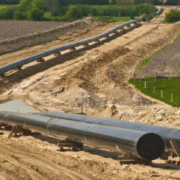
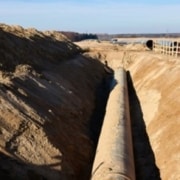
The cooperative nature of the global energy market has been a major driving force for several operations that plan to reach new heights. To develop certain projects, companies often form joint ventures that leverage the expertise of the companies involved to advance projects to reach operational status. The United States has been progressing toward an increased reliance on the gas market as the nation dominates the international gas sector, producing more gas than any other nation. Now, a new conduit known as the Blackcomb Pipeline is reaching towards a 2026 commissioning date.

Joint ventures are often the only way to progress projects towards realization

Click here to read the full article
Source: Energies Media

If you have any questions or thoughts about the topic, feel free to contact us here or leave a comment below.

A key expansion on the Matterhorn Express Pipeline appears to be in service, adding new takeaway capacity for Permian Basin natural gas, according to a recent report from East Daley Analytics.

Pipeline flow data monitored by East Daley show deliveries on Matterhorn rising from a steady 1.65 billion cubic feet per day since June to as high as 1.95 billion cubic feet per day in November, indicating the long-anticipated 0.5 billion cubic feet per day compression expansion may now be operating.

“After consistently delivering about 1.65 billion cubic feet per day since June to the Katy market, Matterhorn flows jumped to as high as 1.95 billion cubic feet per day in November,” East Daley reported, noting the sustained increase “suggests that expansion is now underway or completed.”

Click here to read the full article
Source: Pipeline & Gas Journal

If you have any questions or thoughts about the topic, feel free to contact us here or leave a comment below.

Growing domestic and export demand for Permian’s natural gas is pushing pipeline developers to invest in new pipeline capacity in the U.S. Gulf Coast.

Chemical and manufacturing industries and data centers looking for reliable energy supply drive increased domestic consumption, while the booming LNG exports from the Texas and Louisiana coasts, and at least half a dozen new export plants expected to start up by the end of the decade, are prompting new-built or expanded links to feed gas to the LNG facilities.

Click here to read the full article
Source: Oil Price

If you have any questions or thoughts about the topic, feel free to contact us here or leave a comment below.

British oil giant BP on Tuesday reported stronger-than-expected third-quarter profit as higher crude and gas production outweighed a weak oil trading result. Does BP beats third-quarter? Let’s see.

The London-listed oil and gas major posted underlying replacement cost profit, used as a proxy for net profit, of $2.21 billion for July-September period. That beat analyst expectations of $2.03 billion, according to an LSEG-compiled consensus.

BP’s third-quarter net profit came in at $2.3 billion last year and $2.35 billion in the second quarter of 2025.

Click here to read the full article
Source: CNBC

Do you have any questions or thoughts on how BP beats third-quarter?  Feel free to contact us here or leave a comment below.

ExxonMobil adds more than 80,000 net acres in the Permian basin from Chinese state-owned conglomerate Sinochem, the US supermajor revealed Friday in its quarterly earnings report.

The deal was struck sometime in the third quarter, according to them, which did not reveal specific financial terms for the agreement.

However, chief financial officer Kathy Mikells said ExxonMobil made “a couple of acquisitions” in the quarter that totalled $2.4 billion.

“The transaction provides control of drilling locations and opportunities to further deploy our technology to drive greater returns,” ExxonMobil chief executive Darren Woods said on Friday during the company’s third quarter earnings call.

Click here to read the full article
Source: upstream

Do you have any questions about the topic? Feel free to contact us here or leave a comment below.

Chevron Corporation (NYSE: CVX) beat Wall Street estimates of its second-quarter profit as Permian production surged and U.S. and worldwide oil and gas output jumped to record highs. So how does Chevron tops profit?

Chevron reported on Friday adjusted earnings of $3.1 billion, or $1.77 per share, for the second quarter of 2025, compared to adjusted earnings of $4.7 billion, or $2.55 per share, for the same period last year.

The decline was the result of lower realizations due to lower crude oil prices, lower income from upstream and downstream equity affiliates, and an unfavorable fair value adjustment for shares of Hess Corp, Chevron said.

Click here to read the full article
Source: Oil Price

If you have any questions or thoughts about the topic on how Chevron tops profit? Feel free to contact us here or leave a comment below.

Back in 2017, oil production in the Permian stood at 2.2 million barrels daily. Today, the Permian is producing over 6 million barrels daily, accounting for nearly half of the U.S. total. Predictions of a looming peak have lately multiplied.  According to Wood Mackenzie, the Permian is not done yet—not if prices improve.

To be sure, the boom days seem to be over. Production growth in the most prolific shale play in the United States. It has been slowing already as production costs climb higher while oil prices slide lower. Most forecasts for the region agree that growth in production. It is about to slow down further, and Wood Mac is no exception. The consultancy expects output there to add 200,000 barrels daily this year, for a total of 6.6 million barrels daily.

Going forward, growth is about to continue slowing, and the analysts predicted. Until production peaks at 7.7 million barrels daily in 2035. Yet, while many assume that a peak is inevitably followed by a decline, this will not be the case in the Permian. Output of crude oil in the play will plateau at 7.7 million bpd, and this will more than offset production declines in other producing regions in the country—meaning oil demand will be healthy enough to support such a trend.

Companies with big footprints in the Permian, therefore, can enjoy said footprint even with slower growth. Yet companies tend to seek new growth opportunities all the time to sustain their business, and the prospect of peak growth in the Permian is a real one. The gas-to-oil ratio of output there has been on the rise, as has the water-to-oil ratio in the play. Both trends suggest that some formations in the basin are reaching geological constraints, and more drilling isn’t necessarily proportionate to the oil volumes produced.

Indeed, Big Oil executives have predicted that peak oil supply will arrive in the U.S. before 2035. This does not, of course, mean they are right and Wood Mac analysts are wrong. It simply means that nothing is certain until it happens. And it seems that the slowdown in the Permian is already happening. It also seems that the challenges are multiplying: the latest is concern that toxic wastewater in underground reservoirs could leak and that it could affect seismic activity in the area. In response to these risks, the Railroad Commission of Texas has started imposing restrictions on the amount of wastewater disposed of underground until pressure levels subside.

Click here to read the full article
Source: Oil & Gas 360

Do you have any questions or thoughts about the topic The Permian? Feel free to contact us here or leave a comment below.

U.S. Energy Development Corporation (USEDC), a Fort Worth-based exploration and production company focused on developing oil and gas projects. It is for itself and its partners. It has acquired ~20,000 net acres in Reeves and Ward Counties, Texas. The position includes a substantial proved producing component and multi-year drilling inventory to supplement the firm’s existing footprint in the area. This landmark transaction marks the largest single acquisition in the company’s 45-year history and significantly expands its total Permian Basin holdings. Let’s learn more about how USEDC expands Permian footprint.

Dedicated Drilling Rig

“This transaction greatly enhances the overall quality and resilience of our portfolio, supplementing our reserves with additional proved producing assets, adding years of multi-bench drilling inventory, and expanding our operated economies of scale,” said Jordan Jayson, CEO and chairman of USEDC. “These factors position USEDC for sustained, efficient growth and reinforce our commitment to delivering long-term value for our partners.”

USEDC plans to run a dedicated drilling rig on the acquired acreage. It is making this acquisition a key component of USEDC’s 2025 plan to invest up to $1 billion in U.S. oil and gas properties. In 2024, the firm deployed about $850 million in operated and non-operated oil and gas projects in the basin. The firm’s team continues to evaluate opportunities that align with its disciplined investment strategy and can deliver value to our partners.

RBC Richardson Barr advised on the process and Willkie Farr & Gallagher LLP advised USEDC on the acquisition.

Increased Citibank, N.A. Credit Facility</strong>

Concurrent with this acquisition, USEDC completed an increase in the borrowing base and commitments. This is under its syndicated revolving credit facility led by Citibank, N.A. It is from $165 million to $300 million. The upsized revolving credit facility provides USEDC with significant financial flexibility to support its continued growth and has a maximum credit amount of $500 million.

Click here to read the full article
Source: Oil & Gas 360

Do you have any questions or thoughts about USEDC expands Permian footprint? Feel free to contact us here or leave a comment below.

Chevron Corp., Houston, is forecasting 2025 total oil and gas production will climb. This is 6-8% from last year’s nearly 3.34 MMboe/d, executives said Jan. 31. Analysts expect that growth to pick up in the second half of 2025. Well, all thanks to projects in the Gulf of Mexico and Kazakhstan, but operators in the Permian basin also expect to grow production by about 10% despite receiving less investment. Ready to learn more on Chevron Forecasts 2025?

Mike Wirth, chairman and chief executive officer, and Eimear Bonner, chief financial officer, spoke after Chevron reported its fourth-quarter results—net income of $3.24 billion on revenues of $52.2 billion—and stated that they are focused on capital efficiency and expect to grow Chevron’s free cash flows by $2 billion by the end of 2026.

Lower capital spending will be part of that: Chevron totaled $15.8 billion in capex in 2023 and $16.4 billion last year, investing in projects that helped the company set oil and gas production records, driven in part by the Permian basin output climbing 18% in 2024.

This year, total capex is projected to be about $15 billion. This is with operations in the Gulf of Mexico (Chevron has begun using the ‘Gulf of America’ name instituted by the Trump administration). Moreover, Central Asia is getting more money and Permian assets receiving less (OGJ Online, Dec. 6, 2024). Executives’ initial range for 2026 capex is $14-16 billion.

Click here to read the full article
Source: Oil & Gas Journal

–&lt;/p>

If you have any questions or thoughts about the topic, feel free to contact us here or leave a comm

ent below.

Exxon Mobil Corp. has surpassed analysts’ expectations for the third quarter, driven by a notable increase in oil production from the U.S. Permian Basin, which effectively mitigated the impact of declining crude prices and tighter refining margins. The company reported earnings of $1.92 per share, exceeding the median analyst estimate of $1.87 as compiled by Bloomberg. This performance aligns with a broader trend among major oil companies, as both Chevron Corp. and Shell Plc also delivered results that exceeded market predictions, highlighting a resilient sector amid fluctuating commodity prices.

In a year marked by volatility in the global oil market, Exxon has emerged as the leading performer among major oil producers, with its stock rising over 15% despite a general downturn in international crude prices. This remarkable achievement underscores Exxon’s strategic focus on enhancing oil and natural gas production while reducing operational costs.

Exxon The Largest Energy Explorer

As North America’s largest energy explorer, the company has showcased an impressive capacity for not only expanding its production capabilities but also optimizing operational efficiencies that outpace those of its competitors. This strategic advantage is further underscored by a commitment to leveraging cutting-edge technologies and innovative practices that enhance resource extraction and management. By investing in advanced exploration techniques, the company has been able to identify and tap into previously untapped reserves, thereby significantly increasing its output. This proactive approach not only strengthens its market position but also ensures a sustainable and reliable supply of energy, which is crucial in meeting the growing demands of an ever-evolving energy landscape.

Moreover, the company’s ability to navigate the complexities of the current energy environment—characterized by fluctuating prices, regulatory challenges, and an increasing shift toward renewable energy sources—demonstrates its resilience and adaptability. In aligning its growth strategies with environmental sustainability goals, the company is also positioning itself as a forward-thinking leader in the industry.

By prioritizing investments in renewable energy initiatives and carbon reduction technologies, it not only meets regulatory requirements but also addresses the growing consumer demand for cleaner energy alternatives. This dual focus on traditional energy production and sustainable practices not only enhances the company’s reputation but also secures its future as a key player in the transitional energy economy.

Click here to read the full article
Source: Energy Connects

If you have any questions or thoughts about the topic, feel free to contact us here or leave a comment below.