Tag Archive for: permian

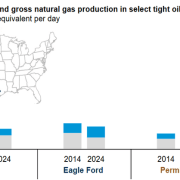
Natural gas produced from the three largest tight oil-producing plays in the United States has increased in the last decade. Share of Natural gas comprised 40% of total production from the Bakken, the Eagle Ford, and the Permian compared with 29% in 2014.

Combined crude oil and natural gas production from tight oil plays has seen remarkable growth. It has more than doubled over the past decade. This substantial increase can be largely attributed to the advancements in extraction technologies. Notably hydraulic fracturing and commonly referred to as fracking. It is a horizontal drilling technique. These innovations have revolutionized the energy sector by enabling producers to access previously unreachable reserves of crude oil and natural gas trapped in tight formations. As a result, the landscape of energy production in the United States and globally has shifted significantly, with an expanding array of resources becoming available for both domestic consumption and international export.

Production of Natural Gas

In particular, the production of associated natural gas, which is derived from oil wells primarily producing crude oil, has outpaced the growth of crude oil output during this period. Specifically, natural gas production from these tight oil plays has more than tripled, reflecting a remarkable increase of 22 billion cubic feet per day (Bcf/d). In contrast, crude oil production has more than doubled, resulting in an additional 4 million barrels per day (b/d). This dynamic shift underscores the interlinked nature of oil and gas production and highlights the growing importance of natural gas as a critical component of the energy portfolio. As market dynamics evolve, stakeholders within the industry must adapt to these changes, balancing the extraction of both resources while considering environmental impacts and regulatory frameworks.

Click here to read the full article
Source: EIA

Do you have any questions or thoughts about the topic related to the share of natural gas? Feel free to contact us here or leave a comment below.

Matador Resources Co., a prominent producer in the Permian Basin, has announced an upward revision in its oil production forecast for 2024, indicating robust growth in the western region of the nation’s most productive oil field. The Dallas-based company now anticipates an average output of 98,500 to 101,500 barrels of oil per day (bopd) next year, reflecting a 5% increase from earlier estimates, where the maximum projection was set at 96,500 bopd.

Throughout this year, Matador has consistently exceeded its production targets each quarter. The company is also witnessing stronger-than-expected production from its newly acquired assets from EnCap Investments LP, which were integrated into operations late in the third quarter.

During the earnings conference call held on Wednesday, executives from Matador Resources Company highlighted the impressive production performance achieved over the recent quarter. They attributed this success primarily to the effective integration of newly acquired assets, which has allowed the company to streamline operations and maximize output. Furthermore, the enhancement of drilling efficiencies has been a critical factor, as advanced techniques and technologies have enabled the team to optimize their drilling processes. Notably, the capability to conduct hydraulic fracturing on multiple wells simultaneously has significantly increased the pace of production, showcasing Matador’s commitment to leveraging innovative practices in a competitive market. This strategic approach not only positions the company favorably against its peers but also demonstrates its resilience in navigating the complexities of the energy sector.

The Global Oil Market

As the global oil market continues to closely monitor U.S. exploration activities, analysts are keenly observing potential indicators of peak growth within the shale production landscape. In this context, Jefferies Financial Group Inc. has revised its forecast for U.S. oil growth downward by 16%. This adjustment reflects a broader trend in the shale sector, where increased consolidation among producers and a focus on operational efficiencies are resulting in a dampening of overall exploration and drilling activity. As companies prioritize profitability and shareholder returns over aggressive expansion, the implications for the future of shale production become increasingly pronounced. The evolving dynamics of this market are likely to influence pricing, supply, and investor sentiment, making it essential for stakeholders to remain vigilant in assessing ongoing developments within the industry.

Click here to read the full article
Source: Oil & Gas 360

If you have any questions or thoughts about the topic related to Permian producer, feel free to contact us here or leave a comment below.
Chevron Corporation has set an ambitious goal to achieve production of 1 million barrels of oil equivalent per day (boe/d) from the Permian Basin by the year 2025. The company’s strategic focus is primarily directed towards the Delaware Basin segment of the Permian, located in New Mexico. This region has been identified as particularly advantageous due to its geological characteristics, which include high-quality source rock that is both thick and deep.

According to Duncan Healey, the asset manager for Chevron’s New Mexico operations, the geological attributes of the Delaware Basin allow for greater efficiency in extracting hydrocarbons. The high pressure present in the subsurface formations facilitates the extraction of oil and gas, making this area a more productive option compared to other regions within the Permian Basin.

In addition to its production goals, Chevron is actively seeking to minimize its environmental impact by implementing innovative technologies and practices. The company has prioritized the use of electrical compressors for its operations wherever feasible, as opposed to relying on traditional natural gas-fueled compressors. This transition not only enhances operational efficiency but also contributes to a reduction in carbon emissions associated with production activities.

Hydraulic fracturing operations of Chevron

Furthermore, Chevron has reported a notable decrease in the carbon intensity of its hydraulic fracturing operations in the region, a development that underscores the company’s commitment to implementing sustainable practices within its extraction processes. This reduction in carbon intensity is a significant achievement, reflecting Chevron’s ongoing investment in innovative technologies and methodologies that enhance operational efficiency while minimizing environmental impact. By adopting advanced techniques and optimizing resource management, Chevron is not only improving its operational performance but also demonstrating a proactive approach to addressing the pressing environmental challenges of our time. These efforts are indicative of the company’s broader strategy to integrate sustainability into its core operations, ensuring that environmental considerations are at the forefront of its business decisions.

Through these initiatives, Chevron aims to strike a balance between its production objectives and its responsibilities as a steward of the environment. The company recognizes the importance of addressing the growing concerns related to climate change and resource sustainability, especially in an era where public and regulatory scrutiny is intensifying. By reinforcing its position as a leader in the energy industry, Chevron is taking meaningful steps towards reducing its carbon footprint and promoting a more sustainable energy landscape. This commitment not only enhances the company’s reputation but also aligns with the global shift towards cleaner energy solutions. As Chevron continues to innovate and embrace sustainable practices, it sets a benchmark for others in the industry, illustrating that it is possible to achieve economic growth while prioritizing the health of our planet for future generations.

Click here to read the full article
Source: Oil & Gas Journal

If you have any questions or thoughts about the topic related to Chevron updates, feel free to contact us here or leave a comment below.
Despite the Biden-Harris administration’s stated objectives to phase out oil and gas production. This is in favor of more sustainable energy sources, recent developments in the Permian and Bakken basins illustrate a contrasting reality. Record oil production is happenning now. These regions, which are pivotal to the U.S. energy landscape, are currently experiencing oil and gas production rates that have not been witnessed in over 13 years. This resurgence in output underscores the complexities of transitioning to greener energy, as it appears that the demand for fossil fuels remains robust. Notably, the Macquarie Group has revised its forecasts, suggesting that U.S. crude production may outpace many analysts’ expectations, indicating a more resilient oil market than previously anticipated.

In the Midland Basin, which spans parts of Texas and New Mexico, operators—including several firms based in Oklahoma—have significantly intensified drilling activities. According to a report by Bloomberg, these companies drilled an impressive average of 47 miles of horizontal lateral wells during the year ending in June, marking a record high not seen since 2011.

The Ongoing Innovation

This remarkable achievement not only underscores the ongoing innovation and efficiency improvements within the energy sector but also provokes critical questions regarding the long-term implications for energy policy and environmental considerations. As production levels continue to rise, it is essential to recognize the transformative impact this growth may have on both local and global markets. Stakeholders—including policymakers, industry leaders, and environmental advocates—must engage in comprehensive dialogues to understand how these advancements can be strategically leveraged to meet increasing energy demands. Furthermore, this raises important inquiries about the sustainability of such production methods and the potential for technological solutions to mitigate adverse effects.

As the industry evolves, the challenge lies in navigating the intricate balance between satisfying immediate energy needs and committing to sustainable practices that align with broader climate goals. This includes exploring renewable energy sources, enhancing energy efficiency, and implementing responsible resource management. By fostering collaboration among diverse stakeholders, the sector can create a framework that not only prioritizes energy security but also promotes environmental stewardship. Therefore, the ongoing dialogue surrounding these developments is crucial, as it will determine the trajectory of energy policies and practices in the years to come, ultimately shaping a sustainable future for generations.

Click here to read the full article
Source: OK Energy Today

If you have any questions or thoughts about the topic of record oil production, feel free to contact us here or leave a comment below.

Ovintiv Inc. is considering a possible sale of its operations in the Uinta basin. This could fetch as much as $2 billion, people with knowledge of the matter said.

Denver-based Ovintiv is working with an adviser to gauge buyer interest in the asset. The people said they are asking not to be identified discussing confidential information.

Ovintiv’s operations in the Central basin of Utah involve drilling in about 2,600 feet of oil-saturated reservoir rock. This is according to its website. The asset could attract interest from private equity-backed energy groups, the people said.

Deliberations are in the early stages and there’s no certainty they’ll result in a transaction. A representative for Ovintiv declined to comment.

Ovintiv’s shares have fallen 12% over the last 12 months, underperforming the S&P 500 Energy Index and giving it a market value of about $11.2 billion. The company’s assets are spread across Texas, Oklahoma, Utah and Canada.

Selling its Utah assets would free up Ovintiv to focus on the Permian basin, the western hemisphere’s most productive shale fields that straddle Texas and New Mexico, where the driller last year expanded its footprint with a $4.3 billion acquisition from EnCap Investments. The company last year also completed the sale of assets in the Williston Basin of North Dakota for $825 million.

Click here to read the full article
Source: Oil&Gas 360

If you have any questions or thoughts about the topic, feel free to contact us here or leave a comment below.

In our latest Short-Term Energy Outlook (STEO), we forecast that crude oil production in the United States. It will grow to an average of 13.7 million barrels per day (b/d). The market for natural gas production will grow to an average of 114.3 billion cubic feet per day (Bcf/d) in 2025. Most of the forecast growth in oil and natural gas production comes from the Permian region of western Texas and eastern New Mexico. It is where we expect productivity gains, new and expanded infrastructure, and high crude oil prices will support rising production.

In order to better capture drilling activity in several onshore U.S. regions, our STEO now makes use of multiple drilling productivity metrics. The number of active rigs is the first in a sequence of metrics that affects regional production; currently more rigs are active in the Permian region than in the rest of the Lower 48 states combined. We also capture and report the number of new wells that those rigs have drilled each month.

Drilled but uncompleted wells (DUCs) have been drilled but have not yet undergone well completion activities to start producing hydrocarbons. The well completion process involves casing, cementing, perforating, hydraulic fracturing, and other procedures required to produce crude oil or natural gas. Ultimately, when these wells are completed, they begin producing crude oil, natural gas, or both.

Producers make decisions on drilling and completion operations based on market conditions, prices, and infrastructure. A downward trend in the DUC count means producers are completing more wells than they are drilling.

Click here to read the full article
Source: EIA

Do  you have any questions or thoughts about the topic? Feel free to contact us here or leave a comment below.

Ovintiv Inc., one of the leading oil driller companies in the shale drilling sector, has recently updated its production forecast for 2024, marking itself as the second oil and gas company to make such an adjustment this year. The firm now projects a production range of between 570,000 and 580,000 barrels of crude oil per day, a notable increase from its previous estimate, which ranged from 545,000 to 575,000 barrels. This revision, calculated from the midpoint of the newly established range, indicates a 2.7% increase in anticipated production levels. Furthermore, Ovintiv has also raised its target for the oil and condensate segment, adjusting it upward by approximately 1%, with a goal of reaching around 208,000 barrels per day. This strategic adjustment reflects the company’s confidence in its operational capabilities and the overall market conditions.

Ovintiv’s decision to enhance its production outlook follows a similar move by Matador Resources Co., highlighting a trend among U.S. drillers who are cautiously navigating the current energy landscape. While many companies are focusing on maintaining stable or modest growth in output, this shift in forecast underscores Ovintiv’s strategic emphasis on maximizing production efficiency while balancing capital allocation to shareholders. As the industry gradually transitions towards a more disciplined approach to growth, Ovintiv’s proactive stance may position it favorably for future opportunities, enabling the company to strengthen its drilling assets and enhance shareholder returns in a competitive market environment.

Oil Driller Performance

The performance of oil wells in the prominent Permian Basin, which extends across Texas and New Mexico, has consistently surpassed industry expectations, presenting a complex challenge for the Organization of the Petroleum Exporting Countries (OPEC) and its allies. These countries have been actively engaged in a strategic effort to gradually unwind coordinated production restrictions that were initially implemented to support and stabilize crude oil prices in response to volatile market conditions. However, the unexpected surge in output from the Permian Basin may complicate these efforts, as increased production can lead to an oversupply in the market, potentially undermining the pricing strategies that OPEC and its allied nations have meticulously crafted. This development raises questions about the sustainability of current pricing levels and may prompt OPEC to reconsider its production policies in light of the new dynamics introduced by the Permian’s robust performance.

Production Comprises Oil and Condensate

In the context of this evolving market landscape, Ovintiv, a prominent player in the region, has strategically positioned its production portfolio to capitalize on the diverse hydrocarbon resources available in the Permian Basin. Currently, approximately one-third of Ovintiv’s production comprises oil and condensate, while the remaining two-thirds consists of natural gas and natural gas liquids. This balanced approach not only allows the company to mitigate risks associated with fluctuations in oil prices but also aligns with the growing demand for natural gas as a cleaner energy alternative. By maintaining a diversified portfolio, Ovintiv is well-positioned to navigate the complexities of the current market environment, adapting to changes in consumer preferences and regulatory landscapes while contributing to the ongoing discourse around energy production and sustainability in the context of the larger global energy transition.

Click here to read the full article
Source: World Oil

If you have any questions or thoughts about the topic, feel free to contact us here or leave a comment below.
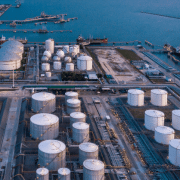
Canada’s Gibson Energy Inc. is betting that swelling oil output in the Permian Basin will fuel continued growth in US crude exports, boosting profit from a major Gulf Coast terminal it bought last year for about $1.1 billion.

The acquisition of the South Texas Gateway Terminal — which expanded Gibson beyond its core business of storing and processing Canadian crude in Alberta and Saskatchewan — is seen by analysts as a key earnings driver for the company. While Gibson has plans to generate more revenue from the terminal through physical improvements and enhanced contracts, the deal is also a macro bet on growing US oil exports.

Click here to read the full article
Source: Bloomberg

If you have any questions or thoughts about the topic, feel free to contact us here or leave a comment below.
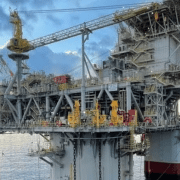
As the shale industry matures, the biggest oil and gas producers, with their efficiencies and lower cost of capital, are moving in.


When extraction of oil and gas from shale deposits took off a dozen years ago. It sparked a revolution that enabled the U.S. to become a global mega-producer of fossil fuels due to technological breakthroughs in hydraulic fracturing and horizontal drilling. Now, energy analysts say, the guard is changing as shale production matures and the capital requirements to maintain production intensify.

Changing of the guard in the Permian

Shale now accounts for 10% of worldwide crude oil and 32% of global natural gas that is currently recoverable, according to the U.S. Energy Information Administration. West Texas’s Permian Basin is the second largest oil field in the world, behind Saudi Arabia’s giant Ghawar field. That makes the Permian the dynamic center of oil and gas extraction in the U.S., and the place where this latest chapter of the energy saga is being written.

Sold Out To The Oil-And-Gas Majors

In a series of major deals last fall, some of the pioneers of shale production in the region sold out to the oil-and-gas majors, greatly consolidating the U.S. industry. Highlighting the trend were Exxon Mobil’s $60 billion purchase of Pioneer Natural Resources in October and Occidental Petroleum’s $10.8 billion deal to buy CrownRock in December. Oil and gas deals totaled more than $250 billion last year, the largest figure in nearly 10 years.

These deals are big, and expensive—Oxy is paying some $5 million per location for CrownRock’s assets, which Andrew Dittmar, a director at Enverus Intelligence Research, described a “nose-bleed territory”—but are unlikely to move the needle on global oil prices more than marginally. Their real importance, analysts say, is in what they signal about shale production in the Permian over the remainder of the decade.


Click here to read the full article
Source: Global Finance


If you have any questions or thoughts about the “Changing of the guard” topic, feel free to contact us here or leave a comment below.
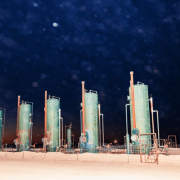
Mega Acquisition Deals

ExxonMobil and Chevron announced mega acquisition deals to buy U.S. firms, which will boost the footprint of the U.S. oil supermajors in their domestic upstream market. Betting on expectations of sustained global oil and gas demand and the lower costs of supply through synergies with the targeted acquired companies.

Exxon and Chevron are now looking to build stronger portfolios closer to home after divesting assets in Western Europe, West Africa, and Russia. Amid growing geopolitical uncertainties and flare-ups in other parts of the world, the U.S. supermajors are betting on higher domestic production and the huge reserves of Guyana

Basically in America’s backyard in Latin America—to strengthen their portfolios with more advantaged resources and raise returns to investors.

The End of an Era

The U.S. oil giants holding a variety of assets spread worldwide is over, analysts have told The Wall Street Journal.

This month, Exxon announced a deal to buy Pioneer Natural Resources in an all-stock transaction valued at $59.5 billion. The implied total enterprise value of the transaction, including net debt, is around $64.5 billion.

Two weeks later, Chevron said it would buy Hess Corporation in an all-stock transaction valued at $53 billion with a total enterprise value, including debt.

The deals, Exxon, which has pulled out of Russia, Cameroon, and Chad in recent years, will become the Permian’s top producer. Chevron, for its part, will add assets offshore Guyana and in the U.S. Bakken shale play, after ditching assets in the UK and Norway in recent years.

Chevron will Become Exxon’s Partner

By buying Hess, Chevron will become Exxon’s partner in Guyana’s vast discovered resources under development. Chevron will get 30% ownership in more than 11 billion barrels of oil equivalent discovered recoverable resource with high cash margins per barrel, strong production growth outlook, and potential exploration upside, the company said.

Guyana is more politically stable than other parts of the world and closer to the United States—efficient for crude exports to America.

Being Disrupted By Geopolitical Turmoil

In a sign of operations being disrupted by geopolitical turmoil, weeks before the announced acquisition of Hess, Chevron was ordered by Israel to shut down production at the offshore Tamar gas field following the Hamas attack.

The Hess deal will also give Chevron 465,000 net acres of high-quality, long-duration inventory in the Bakken supported by the integrated assets of Hess Midstream, complementary U.S. Gulf of Mexico assets, and steady free cash flow from its Southeast Asia natural gas business.

In the Bakken, Hess Corp’s net production was 190,000 barrels of oil equivalent per day (boepd) in the third quarter of 2023, compared with 166,000 boepd in the prior-year quarter, reflecting increased drilling and completion activity and higher NGL and natural gas volumes received under the percentage of proceeds contracts due to lower commodity prices.

In the Permian, Exxon will become the biggest producer after the Pioneer deal.

Upstream Portfolio

The combination with Pioneer “transforms ExxonMobil’s upstream portfolio by increasing lower-cost-of-supply production, as well as short-cycle capital flexibility,” Exxon said when announcing the deal.

The company expects a cost of supply of less than $35 per barrel from Pioneer’s assets.

“By 2027, short-cycle barrels will comprise more than 40% of the total upstream volumes, positioning the company to more quickly respond to demand changes and increase capture of price and volume upside.”


Click here to read the full article
Source: Oil Price

If you have any questions or thoughts about the topic, feel free to contact us here or leave a comment below.