Tag Archive for: oilandgas

A 30-day Public Scoping Period

The Bureau of Land Management Wyoming State Office has opened a 30-day public scoping period. To receive public input on 5 oil and gas parcels totaling 239.38 acres. That can be incorporate in a September 2024 lease sale in Wyoming. The comment period ends February 15, 2024.

The parcels the BLM is analyzing, as well as maps and instructions on how to comment are available on the BLM’s ePlanning website at: https://eplanning.blm.gov/eplanning-ui/project/2030553/510.

A New Royalty Rate

oil & gas lease sale

As authorized under the Inflation Reduction Act. The Bureau of Land Management (BLM) is implementing a new royalty rate of 16.67 percent. For production on any new leases resulting from this sale. This move is focus at ensuring a fair and equitable collection of royalties on oil and gas extracted from federal lands.

The decision to implement this rate aligns with the BLM’s mandate to manage public lands in a responsible manner, striking a balance between promoting energy development and safeguarding the interests of taxpayers and the environment.

BLM’s online fact sheet

To gain a comprehensive understanding of the Inflation Reduction Act and its implications. Interested stakeholders are hearten to refer to the BLM’s online fact sheet. This fact sheet provides detailed information on the key provisions of the Act. Including its objectives, the rationale behind the royalty rate adjustment, and the expected impact on revenue distribution.

It serves as a valuable resource for industry professionals, state officials, and the public at large. Facilitating transparency and enabling informed decision-making regarding oil and gas leasing activities on federal lands. Notably, the generated revenues from these leases will be split between the respective state. Where the drilling occurs and the U.S. Treasury. Make certain that the financial benefits of energy production are shared among relevant stakeholders and contribute to the nation’s overall economic growth.

Click here to read the full article
Source: The Cheyenne Post

If you have any questions or thoughts about the “oil and gas lease sale” topic, feel free to contact us here or leave a comment below.

Data released by the Texas Workforce Commission indicates that upstream oil and gas employment in Texas continues to grow. With the sector adding 31,00 jobs in December. In 2023, upstream oil and gas jobs saw significant increases. In hiring with the job count growing by 15,300 jobs for the year.

“2023 was an incredibly solid year for upstream oil and gas job growth, despite global economic uncertainties that have held back strong price signals, and the year finished with a continued upward push on job expansion,” said Todd Staples, president of the Texas Oil & Gas Association. “These jobs, along with the associated activity in local communities that generates tremendous growth opportunities. Benefit every part of Texas and continue to be the cornerstone of the Texas economy.”

Since the COVID-low point in September of 2020. Months of increase in upstream oil and gas employment in Texas have outnumbered months of decrease by 33 to 6. In that time, industry has added 54,700 Texas upstream jobs, an average growth of 1,403 jobs a month.

These jobs pay among the highest wages in Texas. With employers in oil and natural gas paying an average salary of approximately $124,000 in 2023.

Click here to read the full article
Source: Texas Insider

If you have any questions or thoughts about the “Oil & Gas Jobs” topic, feel free to contact us here or leave a comment below.

As the shale industry matures, the biggest oil and gas producers, with their efficiencies and lower cost of capital, are moving in.


When extraction of oil and gas from shale deposits took off a dozen years ago. It sparked a revolution that enabled the U.S. to become a global mega-producer of fossil fuels due to technological breakthroughs in hydraulic fracturing and horizontal drilling. Now, energy analysts say, the guard is changing as shale production matures and the capital requirements to maintain production intensify.

Changing of the guard in the Permian

Shale now accounts for 10% of worldwide crude oil and 32% of global natural gas that is currently recoverable, according to the U.S. Energy Information Administration. West Texas’s Permian Basin is the second largest oil field in the world, behind Saudi Arabia’s giant Ghawar field. That makes the Permian the dynamic center of oil and gas extraction in the U.S., and the place where this latest chapter of the energy saga is being written.

Sold Out To The Oil-And-Gas Majors

In a series of major deals last fall, some of the pioneers of shale production in the region sold out to the oil-and-gas majors, greatly consolidating the U.S. industry. Highlighting the trend were Exxon Mobil’s $60 billion purchase of Pioneer Natural Resources in October and Occidental Petroleum’s $10.8 billion deal to buy CrownRock in December. Oil and gas deals totaled more than $250 billion last year, the largest figure in nearly 10 years.

These deals are big, and expensive—Oxy is paying some $5 million per location for CrownRock’s assets, which Andrew Dittmar, a director at Enverus Intelligence Research, described a “nose-bleed territory”—but are unlikely to move the needle on global oil prices more than marginally. Their real importance, analysts say, is in what they signal about shale production in the Permian over the remainder of the decade.


Click here to read the full article
Source: Global Finance


If you have any questions or thoughts about the “Changing of the guard” topic, feel free to contact us here or leave a comment below.

2023 was a big year for the U.S. oil and natural gas business. The country, Oil-rich Permian Basin, remained the world’s largest oil producer for the sixth straight year, and a wave of consolidation swept through the industry. A good chunk of that merger and acquisition activity was concentrated in the Permian Basin of West Texas and New Mexico, which has been helping the U.S. hold on to the world’s top spot.

Oil-rich Permian BasinThe Permian Basin produced nearly 6 million barrels of oil a day in 2023. That’s more than Iraq, the United Arab Emirates or Kuwait, according to Peter McNally, analyst at Third Bridge.

“This year was another new high, you know, for the Permian. And that has attracted a lot of interest,” he said.

The Permian Basin has another thing going for it. “It’s almost like real estate: location, location, location,” said Robert McNally of consulting firm Rapidan Energy.

Industry-friendly regulation in Texas is part of that. There’s also less federal regulation when it comes to exporting the oil because it doesn’t have to cross state lines.


Click here to read the full article
Source: Marketplace

If you have any questions or thoughts about the “Oil-rich Permian Basin” topic, feel free to contact us here or leave a comment below.

The Spree of Oil and Gas Topic. Last year was big for Texas oil companies as they jockeyed for access to petroleum-rich plots of the Permian Basin and branched into new territories.

Recent megadeals struck by Chevron and Exxon put pressure on others in the oil industry to catch the consolidation wave, potentially kicking off a new round of mergers and acquisitions that could have a profound impact on Houston for years to come. Additionally, milestone acquisitions made by Exxon and Occidental Petroleum in the carbon capture space also set the stage for Houston to be ground zero for the growing industry.

Exxon to buy Pioneer for $59.5 billion

Exxon said in October that it would buy Irving-based Pioneer Natural Resources for $59.5 billion in the oil giant’s largest deal since it merged with Mobil more than two decades ago. Expected to be settle in 2024, the deal would make Spring-based Exxon the largest operator in the Permian Basin of Texas and New Mexico and bring the company’s daily production to almost 4.5 million barrels of oil equivalent a day — 50% more than the next largest supermajor.

Source: Houston Chronicle

If you have any questions or thoughts about the Spree of Oil and Gas Topic, feel free to contact us here or leave a comment below.

Amidst attacks on U.S. energy production and continued global instability, the U.S. oil and natural gas industry managed to not only meet but exceed expectations in 2023. The industry broke production records and supplied critical energy resources at home and abroad, all while reducing methane emissions.

Oil and Gas Industry Continues to Innovate Amid Record Production

US oil & gas industry


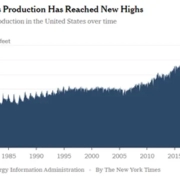
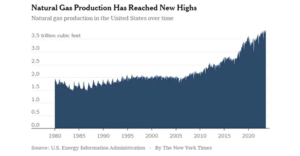
In 2023, the oil and natural gas sectors continued to innovate and reach record breaking levels of production. After becoming a net energy exporter in 2019, the United States has emerged as a behemoth in the global energy market, hitting prolific levels of oil and natural gas production and exports in the past year.

U.S. liquified natural gas (LNG) had a tremendous year with the United States becoming the top LNG exporter in the world.


These record-breaking levels of production have not come at the expense of Americans as some activists claim. To the contrary, record energy production levels have successfully been able to meet both domestic and international demand, providing crucial energy security at home and abroad, all while keeping prices stable.

Click here to read the full article
Source: Energy in Depth


If you have any questions or thoughts about the topic, feel free to contact us here or leave a comment below.

DISCLAIMER: We are not financial advisors. The content on this website is for educational purposes only and merely cites our own personal opinions. In order to make the best financial decision that suits your own needs, you must conduct your own research and seek the advice of a licensed financial advisor if necessary. Know that all investments involve some form of risk and there is no guarantee that you will be successful in making, saving, or investing money; nor is there any guarantee that you won’t experience any loss when investing. Always remember to make smart decisions and do your own research!

Leasing oil and gas properties is a compelling investment opportunity that has piqued the interest of savvy investors looking to diversify their portfolios and tap into the wealth-generating potential of the energy industry. This comprehensive guide explores the intricacies of leasing oil and gas properties, delving into how it works, the benefits, associated risks, types of leases, strategies for success, and the broader implications of this lucrative investment avenue. In a world constantly seeking energy resources, this investment option holds the promise of significant returns and long-term stability.

What is Oil and Gas Property Leasing?

Leasing oil and gas properties involves the contractual agreement between landowners (lessors) and energy companies (lessees) to explore, drill, and extract oil and gas resources from a specific tract of land. In exchange for granting access to their land and resources, landowners receive lease payments and royalties based on the production or sale of these resources.

How Oil and Gas Property Leasing Works

When a landowner leases their property for oil and gas exploration, the lessee typically conducts geological surveys and exploration activities to determine the potential reserves. If the results are promising, the lessee proceeds to drill and extract the resources. The landowner receives lease payments, and if oil and gas are produced, they also receive royalty payments based on the production volume.

Lease terms can vary widely and typically span several years. During this time, lessees have the right to access the property, and they bear the financial responsibility for drilling and operational costs. Landowners, on the other hand, benefit from a steady stream of income without directly participating in the exploration process.

The Advantages of Investing in Oil and Gas Leases

Leasing oil and gas properties offers numerous advantages, making it an attractive investment option:

  • Passive Income: Investors receive lease payments and royalties without being involved in the daily operations of the drilling and extraction processes.
  • Portfolio Diversification: Oil and gas leases provide diversification in an investment portfolio, helping to reduce risk by having assets in different industries.
  • Inflation Hedge: Lease payments and royalties often increase with rising energy prices, serving as an effective hedge against inflation.
  • Potential for High Returns: Successful oil and gas leases can yield substantial returns, especially in areas with abundant reserves.

Risks and Considerations

Before venturing into oil and gas property leasing, investors should be aware of the following risks and considerations:

  • Market Volatility: Oil and gas prices are prone to significant fluctuations, which can affect the value of lease payments and royalties.
  • Environmental and Regulatory Risks: Energy companies must comply with environmental regulations, and changes in laws can impact the viability of a lease.
  • Resource Uncertainty: Drilling can yield unsuccessful results, leading to dry wells and lower returns.
  • Geopolitical Factors: Global events, like supply disruptions or political instability in oil-producing regions, can impact the industry and investment.

Types of Oil and Gas Leases

Various types of oil and gas leases exist, including:

  • Mineral Leases: Cover the rights to extract specific minerals (oil, gas, coal, etc.) from the property.
  • Non-Participating Royalty Interest (NPRI) Leases: Grant the right to a share of production, but not involvement in exploration and drilling.
  • Working Interest Leases: Involve active participation in exploration and drilling processes, with a share in both costs and profits.
  • Overriding Royalty Interest (ORI) Leases: Offer a share of production revenues, typically without responsibility for operational costs.

The choice of lease type depends on an investor’s level of involvement and risk tolerance.

Investment Strategies for Oil and Gas Property Leasing

To maximize the potential of oil and gas property leasing investments, consider these strategies:

  • Due Diligence: Thoroughly research the energy company, the property, and the geological potential of the lease area before investing.
  • Diversification: Spread investments across various leases to minimize risk associated with a single property.
  • Risk Management: Stay informed about market conditions, industry trends, and regulations to make informed investment decisions.
  • Legal and Financial Advisors: Consult with experts in the field to ensure you understand the lease terms and have a solid investment strategy.

Tax Implications

Oil and gas lease income is typically subject to taxation. Consult a tax advisor to understand the tax implications in your jurisdiction and develop a tax-efficient strategy for your investments.

Real-World Success Stories

Several investors have achieved significant success in oil and gas property leasing. Notable examples include:

  • Permian Basin: Investors in this prolific oil-producing region have witnessed substantial returns through productive leases.
  • Marcellus Shale: Landowners in this gas-rich area have enjoyed lucrative royalties from successful drilling operations.

How to Get Started with Oil and Gas Property Leasing

If you’re interested in pursuing oil and gas property leasing, follow these steps:

  • Education: Learn about the energy industry, lease types, and the exploration and drilling process.
  • Research: Identify reputable energy companies and potential lease opportunities in regions with known resources.
  • Consult Professionals: Seek advice from financial advisors, lawyers, and industry experts to guide your investment decisions.
  • Negotiate Leases: Engage in negotiations with lessees to secure favorable terms and agreements.


Leasing oil and gas properties presents an enticing investment opportunity with the potential for substantial returns and passive income. However, it is not without risks, and investors should approach it with diligence and careful consideration. A well-researched investment strategy, diversification, and the guidance of experts can help unlock the wealth-generating potential of this lucrative investment avenue. In a world with a growing energy demand, oil and gas property leasing stands as a valuable and promising addition to a diversified investment portfolio.

If you have further questions related to the Leasing oil and gas properties topic, feel free to reach out to us here.


North Dakota Mineral Resource Director said 2023 was a good year for the state’s oil and gas industry.

“Prices were good,” said Lynn Helms. “And the companies were able to attract enough frack crews, to get into the mid to upper teens.”

Helms said the companies weren’t as successful with drilling crews.

“There are still workforce issues,” Helms said.

Helms said the year began with North Dakota producing just over a million barrels of oil per day. He said the hope was to get to the 1.3 million barrel mark by the end of the year. He said those final production numbers aren’t in yet.

As for next year?

“2024 looks to be slower growth,” Helms said. “But people are pretty optimistic.”

North Dakota Pipeline Authority Director Justin Kringstad echoed Helms’ comments.

“In 2023, what stands out is the month we got down to 4 percent flaring,” Kringstad said. “We’re continuing to see dedication by all sides — producers, mid-stream companies — to stay on top of this.”

Click here to read the full article
Source: Prarie Public NewsRoom

If you have further questions related to the “Oil and Gas in North Dakota” topic, feel free to reach out to us here.
⚠️ IMPORTANT LEGAL DISCLAIMER:

The information provided on this page is for general informational purposes only and does not constitute legal, financial, or investment advice. Oil and gas laws, mineral rights regulations, and royalty structures vary significantly by state and jurisdiction. While we strive to provide accurate and up-to-date information, no guarantee is made to that effect, and laws may have changed since publication.

You should consult with a licensed attorney specializing in oil and gas law in your jurisdiction, a qualified financial advisor, or other appropriate professionals before making any decisions based on this material. Neither the author nor the publisher assumes any liability for actions taken in reliance upon the information contained herein.

Overriding royalty interests (ORRI) are a unique and valuable aspect of the oil and gas industry, particularly in a state like Texas, which has a rich history of energy production. If you’re a landowner, investor, or industry professional involved in the Texas oil and gas sector, understanding overriding royalty interests is essential. In this comprehensive guide, we will explore the world of overriding royalty interests in Texas, shedding light on what they are, how they work, their advantages and disadvantages, and the key considerations for landowners and investors.

Texas has long been synonymous with the oil and gas industry, making it a prime location for investment and ownership in this sector. Overriding royalty interests are a critical aspect of this industry, allowing landowners and investors to participate in the energy wealth of the state. In this guide, we’ll take a deep dive into overriding royalty interests in Texas, exploring their nuances, benefits, risks, and what you need to know to navigate this complex terrain.

Understanding Overriding Royalty Interests

An overriding royalty interest (ORRI) is a share of the revenue that produce from the extraction and production of minerals, such as oil and natural gas, from a specific piece of land. ORRIs are created by a royalty interest that is “overriding” the rights of the working interest owner. In simpler terms, the holder of an ORRI is entitled to a portion of the income generated from the minerals extracted from a property, regardless of whether they own the property itself.

An ORRI is typically expressed as a percentage, such as 1% or 3%, and it is calculated based on the gross proceeds from the sale of extracted minerals. This interest is often granted to someone other than the property owner, such as a geologist, drilling company, or a professional in the industry.

The Mechanics of Overriding Royalty Interests

To understand how overriding royalty interests work, consider the following scenario:

  • A landowner, say in Texas, leases their land to an oil and gas company for drilling and extraction.
  • The lease agreement specifies the terms, including royalty rates, which are typically shared between the landowner (the lessor) and the company (the lessee).
  • Let’s say the landowner and the company agree on a 20% royalty rate, meaning the landowner receives 20% of the revenue from the minerals extracted from their land.
  • Now, suppose a geologist or investor holds an overriding royalty interest of 3% on this property. This ORRI entitles them to 3% of the gross revenue from mineral sales, in addition to the landowner’s 20% royalty.
  • The remaining 77% of the revenue goes to the drilling company as the working interest.

In this way, the holder of the overriding royalty interest benefits from the minerals extracted from the land without being responsible for the operational costs or day-to-day activities involved in drilling and production.

Advantages of Overriding Royalty Interests

Overriding royalty interests offer several advantages for landowners and investors in the Texas oil and gas industry:

Passive Income Stream

Holders of ORRIs receive a steady and often passive income stream. They can enjoy financial benefits without actively participating in the operations, making ORRIs an attractive source of income for many.

Minimal Operational Responsibilities

ORRI owners are not responsible for the operational activities, expenses, or risks associated with drilling and production. This minimizes their operational involvement and risk exposure.

Potential for Profit

Texas has a long history of successful oil and gas production, making it a prime location for ORRI ownership. With the potential for significant profits, investors are under pressure to the state’s energy sector.

Challenges and Risks of Overriding Royalty Interest

While ORRIs offer numerous advantages, they are not without their challenges and risks:

Market Volatility

The oil and gas industry is known for its price volatility. Fluctuations in energy prices can impact the profitability of ORRIs and the income generated for owners.

Lease Terms and Royalty Rates

The terms of the lease agreement and the royalty rates negotiated between the landowner and the drilling company can impact the financial benefits of an ORRI. Unfavorable terms may reduce the potential income.

Environmental and Regulatory Concerns

Oil and gas operations are subject to complex and evolving regulatory frameworks at federal, state, and local levels. Staying compliant with these regulations and addressing environmental concerns is a challenge for ORRI owners.

Key Considerations for Landowners and Investors

For landowners and investors interested in overriding royalty interests in Texas, several key considerations should remain in mind:

Lease Negotiations

Landowners should carefully review and negotiate lease agreements to ensure favorable terms, royalty rates, and protection of their interests. Legal and industry expertise can be invaluable in this process.

Legal and Tax Implications

The legal and tax aspects of ORRI ownership can be complex. Seek professional guidance to understand the unique implications and potential tax benefits associated with ORRIs.

Due Diligence

Before investing in ORRIs, conduct thorough due diligence. Evaluate the potential for profitability, the stability of the drilling company. And the environmental and regulatory factors that may impact the investment.

Overriding Royalty Interests vs. Working Interests

It’s essential to distinguish between overriding royalty interests (ORRIs) and working interests (WIs). While ORRI owners receive a share of the revenue without operational responsibilities, WI owners are actively involved in the drilling and production operations. WI owners also bear a share of the operational costs and risks. Understanding the differences between these interests is critical when considering involvement in the oil and gas industry.

Overriding royalty interests in Texas offer a opportunity for landowners and investors to participate in the state’s oil and gas industry. While they provide a steady income stream and the potential for substantial profits, they are not without their challenges and risks. By carefully considering lease terms, understanding legal and tax implications, and conducting thorough due diligence, landowners and investors can make informed decisions regarding ORRIs in Texas. As a dynamic and ever-evolving industry, the Texas oil and gas sector continues to be a promising source of income and investment opportunities through overriding royalty interests.


If you have further questions related to the Overriding Royalty Interest topic, feel free to reach out to us here.
Remember: This information is for educational purposes only. Consult qualified professionals for advice specific to your situation and jurisdiction.

Oil price rises (CL=F, BZ=F) have moved higher following news that producer BP (BP) will temporarily halt shipments through the Red Sea. After reported attacks on vessels delivering on this route. Analysts estimate 12-15% of the global oil supply moves through this passage from the Middle East. Meaning any prolonged closure could impact availability in relevant markets.

Yahoo Finance Ines Ferré breaks down the details and what these pressures will mean for oil and natural gas prices (NG=F).

And what we’ve seen today is a bump for WTI for crude oil. Let’s take a look at the chart so you can see where we’re at. With WTI and crude both jumping more than 2% during today’s session. This is after British oil giant, BP, said that it was pausing ship shipments via the Red Sea. After Houthi rebels were attacking ships. This was a precautionary pause.

Several shipping companies have been pausing their shipments, including Evergreen, that’s a global container shipping company. Now, the Red Sea, that’s connected to the Mediterranean Sea by the Suez Canal. Anywhere between 12 and 15% of oil is move via the Suez Canal, so it is a very important area that’s connecting– that is a shipping route connecting Europe to Asia.

Click here to read the full article
Source: yahoo!finance

If you have any questions or thoughts about the topic Oil Price Rises, feel free to contact us here or leave a comment below.