Tag Archive for: permian

Devon Energy and Coterra Energy have agreed to combine in an all-stock transaction that values the deal at roughly $58 billion. Under the terms announced on February 2, 2026, Coterra shareholders would receive 0.70 shares of Devon stock for each Coterra share, leaving Devon shareholders with about 54% of the combined company and Coterra shareholders with about 46%.

The companies say the merger would create a larger U.S. shale operator with a major footprint in the Permian Basin, including sizable adjacent positions in the Delaware Basin, alongside assets in other core U.S. producing regions. Leadership is expected to include Devon CEO Clay Gaspar as chief executive, with Coterra CEO Tom Jorden serving as non-executive chair. The companies also highlighted targeted cost and operating synergies, alongside a plan focused on scale, inventory depth, and shareholder returns—an approach that continues the broader consolidation trend across U.S. upstream producers.

If you want more background on oil & gas consolidation, see our explainer on industry consolidation and our overview of oil production in Texas.

Source: MSN
Read the full original article here

Ranger Land & Minerals curates weekly insights from across the oil and gas industry to keep our readers informed. To receive news like this directly in your inbox, join our free newsletter. If you’d like to learn more about mineral rights and oil royalty opportunities, contact us to speak with a representative.
DISCLAIMER: The summary above is based on information from third-party sources believed to be reliable, but its accuracy and completeness cannot be guaranteed. It is provided for general informational purposes only and does not constitute investment, financial, tax, legal, or other professional advice, nor a recommendation or solicitation to buy or sell any security, commodity, or investment product. Markets, regulations, and circumstances can change, and the information may not reflect the most current developments. You should conduct your own research and consult a qualified financial advisor, CPA, or other professional before making decisions based on this content. The publisher and its affiliates disclaim any liability for losses or damages arising from reliance on the information provided above.


The U.S. Geological Survey (USGS) says the Permian Basin may hold sizable additional oil and natural gas resources in the deeper Woodford and Barnett shale formations beneath West Texas and New Mexico. In a new assessment released Wednesday, the agency estimated about 1.6 billion barrels of technically recoverable oil and 28.3 trillion cubic feet of natural gas—volumes it said equate to roughly 10 weeks of U.S. oil use and about 10 months of U.S. gas consumption at current rates.

For producers, the assessment highlights why some Houston-based operators are increasingly looking beyond established drilling “landing zones” as they plan for longer-term supply. Researchers at the University of Texas Bureau of Economic Geology noted the Woodford and Barnett targets are deeper and hotter than many conventional Permian plays, which can raise costs and increase associated gas volumes. The Barnett also contains more clay, creating additional drilling hazards, and companies still need to pinpoint the most productive “sweet spots” before development can scale. For a practical overview of exploration steps mineral owners may hear about, see How to Find Oil on Your Land and Ranger’s Oil & Gas Royalties guide.

Source: Houston Chronicle
Read the full original article here

Ranger Land & Minerals curates weekly insights from across the oil and gas industry to keep our readers informed. To receive news like this directly in your inbox, join our free newsletter. If you’d like to learn more about mineral rights and oil royalty opportunities, contact us to speak with a representative.
DISCLAIMER: The summary above is based on information from third-party sources believed to be reliable, but its accuracy and completeness cannot be guaranteed. It is provided for general informational purposes only and does not constitute investment, financial, tax, legal, or other professional advice, nor a recommendation or solicitation to buy or sell any security, commodity, or investment product. Markets, regulations, and circumstances can change, and the information may not reflect the most current developments. You should conduct your own research and consult a qualified financial advisor, CPA, or other professional before making decisions based on this content. The publisher and its affiliates disclaim any liability for losses or damages arising from reliance on the information provided above.

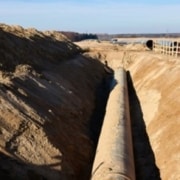
Energies Media reports that Energy Transfer is advancing the Hugh Brinson Pipeline, a new 442-mile project designed to move natural gas from processing facilities in Texas into existing pipeline infrastructure south of the Dallas–Fort Worth area. The company said the pipeline remains on schedule for completion in late 2026, with initial deliveries expected toward the end of 2026.

The article notes that the project is part of a broader buildout of Permian Basin natural gas takeaway capacity aimed at serving growing demand from Texas markets and other downstream customers. Energy Transfer also said the project has progressed through required regulatory processes and that much of the route follows an existing pipeline right-of-way to help limit construction impacts. For additional context on the wider trend, see Ranger coverage on the Permian pipeline buildout and recent capacity additions like the Matterhorn Express expansion.

Energies Media adds that construction began in 2025 and the project is expected to support local manufacturing of steel components. During construction, Energy Transfer said the effort provided nearly 3,100 jobs, with an additional 34 full-time roles associated with the project.

Source: Energies Media
Read the full original article here

Ranger Land & Minerals curates weekly insights from across the oil and gas industry to keep our readers informed. To receive news like this directly in your inbox, join our free newsletter. If you’d like to learn more about mineral rights and oil royalty opportunities, contact us to speak with a representative.
DISCLAIMER: The summary above is based on information from third-party sources believed to be reliable, but its accuracy and completeness cannot be guaranteed. It is provided for general informational purposes only and does not constitute investment, financial, tax, legal, or other professional advice, nor a recommendation or solicitation to buy or sell any security, commodity, or investment product. Markets, regulations, and circumstances can change, and the information may not reflect the most current developments. You should conduct your own research and consult a qualified financial advisor, CPA, or other professional before making decisions based on this content. The publisher and its affiliates disclaim any liability for losses or damages arising from reliance on the information provided above.
An opinion column from Tracee Bentley, president and CEO of the Permian Strategic Partnership (PSP), argues that sustaining Permian Basin growth depends on continued investment in the southeast New Mexico communities that support energy development. Bentley writes that if the Permian Basin were a country, it would rank among the world’s top oil producers, and that the region could account for 50% of U.S. oil production by 2030. She says energy companies formed the PSP to collaborate on regional priorities, reporting more than $214 million in direct spending over six years and over $2.3 billion in leveraged collaborative investments.

The piece focuses on workforce development and public services needed to support long-term activity, citing an estimated need for nearly 186,000 additional workers by 2040. Bentley highlights PSP support for career and technical programs in Hobbs, Artesia, and at Southeast New Mexico College, including $15 million in funding this year. She also points to expanded commercial driver training at New Mexico Junior College (with an estimated need for 7,000 new drivers by 2040), regional first-responder training with Eddy County Fire and Rescue, and a $325,000 investment for five cardiac monitors for Carlsbad Fire Department units. Bentley adds that the Permian region represents 9.2% of New Mexico’s population but produces 25.9% of the state’s private-sector GDP, framing these efforts as support for a durable economic base tied to the Permian Basin and ongoing oil and gas royalties.

Source: Albuquerque Journal
Read the full original article here

Ranger Land & Minerals curates weekly insights from across the oil and gas industry to keep our readers informed. To receive news like this directly in your inbox, join our free newsletter. If you’d like to learn more about mineral rights and oil royalty opportunities, contact us to speak with a representative.
DISCLAIMER: The summary above is based on information from third-party sources believed to be reliable, but its accuracy and completeness cannot be guaranteed. It is provided for general informational purposes only and does not constitute investment, financial, tax, legal, or other professional advice, nor a recommendation or solicitation to buy or sell any security, commodity, or investment product. Markets, regulations, and circumstances can change, and the information may not reflect the most current developments. You should conduct your own research and consult a qualified financial advisor, CPA, or other professional before making decisions based on this content. The publisher and its affiliates disclaim any liability for losses or damages arising from reliance on the information provided above.
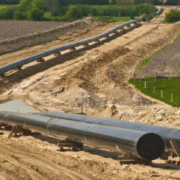
The cooperative nature of the global energy market has been a major driving force for several operations that plan to reach new heights. To develop certain projects, companies often form joint ventures that leverage the expertise of the companies involved to advance projects to reach operational status. The United States has been progressing toward an increased reliance on the gas market as the nation dominates the international gas sector, producing more gas than any other nation. Now, a new conduit known as the Blackcomb Pipeline is reaching towards a 2026 commissioning date.

Joint ventures are often the only way to progress projects towards realization

Click here to read the full article
Source: Energies Media

If you have any questions or thoughts about the topic, feel free to contact us here or leave a comment below.

A key expansion on the Matterhorn Express Pipeline appears to be in service, adding new takeaway capacity for Permian Basin natural gas, according to a recent report from East Daley Analytics.

Pipeline flow data monitored by East Daley show deliveries on Matterhorn rising from a steady 1.65 billion cubic feet per day since June to as high as 1.95 billion cubic feet per day in November, indicating the long-anticipated 0.5 billion cubic feet per day compression expansion may now be operating.

“After consistently delivering about 1.65 billion cubic feet per day since June to the Katy market, Matterhorn flows jumped to as high as 1.95 billion cubic feet per day in November,” East Daley reported, noting the sustained increase “suggests that expansion is now underway or completed.”

Click here to read the full article
Source: Pipeline & Gas Journal

If you have any questions or thoughts about the topic, feel free to contact us here or leave a comment below.

Growing domestic and export demand for Permian’s natural gas is pushing pipeline developers to invest in new pipeline capacity in the U.S. Gulf Coast.

Chemical and manufacturing industries and data centers looking for reliable energy supply drive increased domestic consumption, while the booming LNG exports from the Texas and Louisiana coasts, and at least half a dozen new export plants expected to start up by the end of the decade, are prompting new-built or expanded links to feed gas to the LNG facilities.

Click here to read the full article
Source: Oil Price

If you have any questions or thoughts about the topic, feel free to contact us here or leave a comment below.

British oil giant BP on Tuesday reported stronger-than-expected third-quarter profit as higher crude and gas production outweighed a weak oil trading result. Does BP beats third-quarter? Let’s see.

The London-listed oil and gas major posted underlying replacement cost profit, used as a proxy for net profit, of $2.21 billion for July-September period. That beat analyst expectations of $2.03 billion, according to an LSEG-compiled consensus.

BP’s third-quarter net profit came in at $2.3 billion last year and $2.35 billion in the second quarter of 2025.

Click here to read the full article
Source: CNBC

Do you have any questions or thoughts on how BP beats third-quarter?  Feel free to contact us here or leave a comment below.

ExxonMobil adds more than 80,000 net acres in the Permian basin from Chinese state-owned conglomerate Sinochem, the US supermajor revealed Friday in its quarterly earnings report.

The deal was struck sometime in the third quarter, according to them, which did not reveal specific financial terms for the agreement.

However, chief financial officer Kathy Mikells said ExxonMobil made “a couple of acquisitions” in the quarter that totalled $2.4 billion.

“The transaction provides control of drilling locations and opportunities to further deploy our technology to drive greater returns,” ExxonMobil chief executive Darren Woods said on Friday during the company’s third quarter earnings call.

Click here to read the full article
Source: upstream

Do you have any questions about the topic? Feel free to contact us here or leave a comment below.

Chevron Corporation (NYSE: CVX) beat Wall Street estimates of its second-quarter profit as Permian production surged and U.S. and worldwide oil and gas output jumped to record highs. So how does Chevron tops profit?

Chevron reported on Friday adjusted earnings of $3.1 billion, or $1.77 per share, for the second quarter of 2025, compared to adjusted earnings of $4.7 billion, or $2.55 per share, for the same period last year.

The decline was the result of lower realizations due to lower crude oil prices, lower income from upstream and downstream equity affiliates, and an unfavorable fair value adjustment for shares of Hess Corp, Chevron said.

Click here to read the full article
Source: Oil Price

If you have any questions or thoughts about the topic on how Chevron tops profit? Feel free to contact us here or leave a comment below.