Tag Archive for: naturalgas

In October 2008, the economy reeling from the onset of the Great Recession. Oil prices having spiked to $147 per barrel ($211 in today’s money). Vice Presidential candidate Joe Biden was asked during a debate to contrast his party’s energy policy with that of the Republicans. Biden said that their “only answer is drill, drill, drill. Drill baby we must, but it will take 10 years for one drop of oil to come out of any of the wells that are going to be drilled.”

His vice presidential opponent Sarah Palin pounced; “The chant is ‘drill, baby, drill.’ And that’s what we hear all across this country… because people are so hungry for those domestic sources of energy to be tapped into.”

Biden and Obama won that election, though Biden woefully underestimated American ingenuity. During the Obama years drillers boosted natural gas production by 45% to 92 billion cubic feet per day (bcfd), while oil output more than doubled to 9 million barrels per day (bpd).

During the 2008 presidential campaign, Sarah Palin, the then-governor of Alaska and the Republican vice presidential nominee, seized the opportunity to emphasize the urgent demand for domestic energy resources. In her rallying cry, she declared, “The chant is ‘drill, baby, drill.. And that’s what we hear all across this country. It is because people are so hungry for those domestic sources of energy to be tapped into”. This statement resonated with many Americans who were increasingly concerned about rising energy prices and the nation’s reliance on foreign oil. Palin’s remarks highlighted a growing sentiment among the electorate, advocating for the exploration and utilization of domestic energy reserves as a means to achieve energy independence and alleviate economic pressures faced by households across the nation.

Fervent Calls for Increased Drilling

Despite these fervent calls for increased drilling, Joe Biden and Barack Obama ultimately emerged victorious in the 2008 election. Biden underestimated the resilience and adaptability of American ingenuity in the energy sector. The Obama administration witnessed a remarkable transformation in energy production. The advances in technology and drilling techniques led to a significant surge in domestic output. Natural gas production soared by an impressive 45%. It was reaching approximately 92 billion cubic feet per day. On the other hand, oil production more than doubled. It’s climbing to roughly 9 million barrels per day. This dramatic increase not only underscored the potential of American energy resources. It also contributed to a shift in the global energy landscape, positioning the United States as a leading producer of both oil and natural gas.

Click here to read the full article
Source: Forbes

Do you have any questions or thoughts about the topic of drill baby? Feel free to contact us here or leave a comment below.

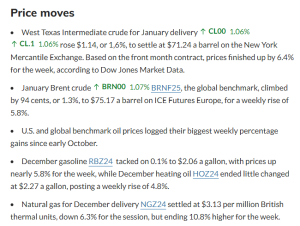
Oil futures settled higher on Friday, with the U.S. crude benchmark up by more than 6% for the week as traders continued to monitor escalating tensions between Ukraine and Russia, which is among the world’s biggest oil producers. Let’s talk more about oil prices score.

Still, downbeat economic data from Europe fed concerns over a potential slowdown in energy demand, as European business activity sank to a 10-month low, helping to limit gains for oil and keep WTI and Brent prices down year to date.

Oil prices score

Click here to read the full article
Source: Market Watch

If you have any questions or thoughts about the topic oil prices score, feel free to contact us here or leave a comment below.

When it comes to the U.S. energy economy, it’s a fracking world and we’re just living in it. Increasingly, fracking is supporting not just epic quantities of crude oil. Moreover natural gas, according to a new report by the U.S. Energy Information Administration. Let’s talk more about the greater natural gas production.

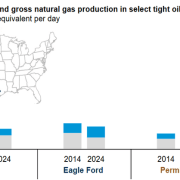
Natural gas production has more than tripled in the Permian, Eagle Ford and Bakken. Oil plays over the past decade, and the balance of oil and natural gas has shifted more toward natural gas.

“More crude oil is being produced from these wells, more natural gas will come to the surface over time,” said Trinity Manning-Pickett, an economist with the Energy Information Administration.

The Greater Natural Gas Production in the Permian, Eagle Ford

Over the past decade, there have been changes in the natural gas production in the Permian, Eagle Ford, and Bakke. The oil industry experienced a remarkable increase. It is more than tripling in volume. This surge in natural gas output can be attributed to advancements in extraction technologies.

Examples are hydraulic fracturing and horizontal drilling, which have enabled producers to tap into previously inaccessible reserves.  These methodologies continue to evolve. They not only enhance the efficiency of oil extraction, but also inadvertently lead to a significant uptick in natural gas production. Consequently, the energy landscape within these prolific regions has undergone a transformation, resulting in a shifting balance where natural gas now constitutes a larger portion of the overall hydrocarbon output than in the past.

The Trinity Manning-Pickett

Trinity Manning-Pickett, an economist with the Energy Information Administration, offers valuable insights into this phenomenon. It is noted that “as more crude oil is being produced from these wells, more natural gas will come to the surface over time.” This reflects a fundamental characteristic of the geological formations in these regions, where oil and gas resources often coexist.

As operators focus on maximizing oil yields, they inevitably generate substantial volumes of associated natural gas, which must be managed effectively to prevent flaring and ensure economic viability. As the market dynamics evolve, stakeholders in the energy sector must adapt to the growing presence of natural gas, exploring new avenues for its utilization, distribution, and integration into the broader energy portfolio. This shift not only has implications for energy producers but also influences energy policy, environmental considerations, and the global energy transition toward more sustainable sources.

Click here to read the full article
Source: MARKETPLACE

Do you have any questions or thoughts about the topic related to Greater natural gas production?

Feel free to contact us here or leave a comment below.

Natural gas produced from the three largest tight oil-producing plays in the United States has increased in the last decade. Share of Natural gas comprised 40% of total production from the Bakken, the Eagle Ford, and the Permian compared with 29% in 2014.

Combined crude oil and natural gas production from tight oil plays has seen remarkable growth. It has more than doubled over the past decade. This substantial increase can be largely attributed to the advancements in extraction technologies. Notably hydraulic fracturing and commonly referred to as fracking. It is a horizontal drilling technique. These innovations have revolutionized the energy sector by enabling producers to access previously unreachable reserves of crude oil and natural gas trapped in tight formations. As a result, the landscape of energy production in the United States and globally has shifted significantly, with an expanding array of resources becoming available for both domestic consumption and international export.

Production of Natural Gas

In particular, the production of associated natural gas, which is derived from oil wells primarily producing crude oil, has outpaced the growth of crude oil output during this period. Specifically, natural gas production from these tight oil plays has more than tripled, reflecting a remarkable increase of 22 billion cubic feet per day (Bcf/d). In contrast, crude oil production has more than doubled, resulting in an additional 4 million barrels per day (b/d). This dynamic shift underscores the interlinked nature of oil and gas production and highlights the growing importance of natural gas as a critical component of the energy portfolio. As market dynamics evolve, stakeholders within the industry must adapt to these changes, balancing the extraction of both resources while considering environmental impacts and regulatory frameworks.

Click here to read the full article
Source: EIA

Do you have any questions or thoughts about the topic related to the share of natural gas? Feel free to contact us here or leave a comment below.

U.S. power-generating companies are announcing plans for the highest volume of new natural gas-fired capacity. This is after years as the AI boom is driving electricity demand.

During the first half of 2024, electricity-generating firms unveiled plans for the new gas-powered capacity. According to data from the Sierra Club cited by Bloomberg, this is equal to all capacity announced in 2020.

The increase in gas-fired generation jeopardizes the current U.S. emissions and ‘clean grid’ goals.

Natural gas-fired electricity generation in the United States has jumped year-to-date compared to last year. This is as total power demand rose with warmer temperatures and demand from data centers.

Natural gas could be a big winner in the AI-driven power demand surge in the U.S. Many tech companies prefer to power their AI development centers with solar and wind. The need to get these data centers built and powered fast would boost demand for natural gas.

After more than a decade of flatlining power consumption in America, the AI boom, chip, and other tech manufacturing are leading to higher U.S. electricity demand.

For years, natural gas has accounted for the largest share of U.S. power generation, at around 40% of all electricity-generating sources.

This year, natural gas is expected to provide around 42% of America’s electricity, similar to last year, as total consumption is set to grow by 3% in 2024 and another 2% in 2025, per data from the U.S. Energy Information Administration (EIA).

Click here to read the full article
Source: Oil Price

Do you have any questions or thoughts about the topic U.S Natural Gas Power? Feel free to contact us here or leave a comment below.

Latest Oil & Gas Remaining or The Annual North American Energy Inventory

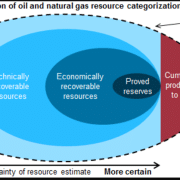
The Institute for Energy Research (IER), a free market think tank focusing on energy. Has just released its latest oil & gas remaining or the annual North American Energy Inventory. The report shows that North America has 1.66 trillion barrels of technically recoverable resources. And at current rates of consumption, the report calculates that it would take 227 years to deplete it all.

The report provides valuable insights into the current state of fossil fuel reserves. Particularly focusing on coal – renowned for being one of the most abundant fossil fuels available. It highlights that the proved reserves of coal stand. At a level that could potentially meet the global demand for over four centuries at the consumption rates witnessed in 2022.

The Significant Supply of Coal and its Enduring Presence

This substantial figure underscores the significant supply of coal and its enduring presence in the global energy mix. Contrary to the notion of imminent depletions such as “peak oil” or “peak gas”. The report challenges these concerns when it comes to coal. Urging against heeding the radicalized left’s rhetoric that often perpetuates such fear-mongering narratives.

The extensive longevity of coal reserves as indicated in the report serves as a compelling reminder of the need for a balanced and evidence-based approach to discussions around fossil fuels. By debunking the myth of an impending “peak coal,” the report encourages a more nuanced understanding of the energy landscape, emphasizing the importance of rational analysis over sensationalized claims.

In a time where energy security and sustainability are paramount considerations. The enduring reserve capacity of coal presents an opportunity for thoughtful consideration and strategic planning in meeting the world’s energy needs for the foreseeable future.

Click here to read the full article
Source: Marcellus Drilling News

If you have any questions or thoughts about the Oil & Gas Remaining Topic, feel free to contact us here or leave a comment below.

Oil prices have recorded the biggest weekly decline in three months thanks in large part to challenging economic indicators and growing demand concerns. Last week, U.S. crude inventories posted an unexpected rise, with the American Petroleum Institute (API) reporting a build of 4.91 million barrels, a sharp contrast from the anticipated decrease of 1.1 million barrels. This build has come after reports that U.S. crude production surged to 13.15 million barrels per day in February, up from 12.58 million barrels in January, suggesting supply is outpacing demand.

But it’s not just bearish crude oil metrics driving the oil price decline. The EIA has provided an initial estimate that U.S. gasoline demand declined 4.4% Y/Y in April, a negative sign for oil bulls that has triggered a rapid pivot by speculative funds towards the short side of the market. However, commodity analysts at Standard Chartered have argued that the demand pessimism is overblown. According to StanChart, there appears to be a systemic downwards bias in the weekly estimates of U.S. fuel demand, with actual gasoline demand exceeding estimates in 22 of the past 24 months, while distillate demand (mainly diesel) has been revised higher in all of the past 24 months. The analysts point out that last September, the EIA put gasoline demand at 8.014 million barrels per day (mb/d), a stark contrast from the 9.465 mb/d recorded for in September 2022. Across the whole month, the EIA data implied a y/y demand drop of 5.6%, eliciting talks of demand destruction with some experts contending that demand was at its weakest since 1999. However, it later turned out that actual gasoline demand only fell 0.4% Y/Y, far milder than the EIA estimate of a 5.6% decline. StanChart believes the EIA’s estimate for April gasoline demand is too low with actual demand likely to be surprise to the upside.

Click here to read the full article
Source: Oil & Gas 360

If you have any questions or thoughts about the topic, feel free to contact us here or leave a comment below.

US Oil and Gas

Last year marked a record for US oil and gas production with an average daily production of 12.93 million barrels per day (BPD). That record was 5% greater than the previous record of 12.31 million bpd set in 2019.

However, current data from the Energy Information Administration (EIA) shows that average daily production thus far in 2024 is 13.12 million bpd — 7.1% ahead of the production level of a year ago and 1.4% higher than last year’s record pace.

U.S. natural gas production tells a similar tale. The EIA recently confirmed that 2023 marked a record for U.S. natural gas production at 125 billion cubic feet per day (CFD). That was 4% ahead of the previous record set in 2022.

Natural gas data isn’t reported as often as petroleum data, but January’s natural gas production level was 124.6 billion CFD. That followed a monthly production record in December 2023. It was slightly behind last year’s record level, but there are some seasonal effects in natural gas production. If we compare January 2024 to January 2023, this year’s production level was 1.1% higher than a year ago.

Click here to read the full article
Source: Forbes

If you have any questions or thoughts about the US oil and gas topic, feel free to contact us here or leave a comment below.

DISCLAIMER: We are not financial advisors. The content on this website is for educational purposes only and merely cites our own personal opinions. In order to make the best financial decision that suits your own needs, you must conduct your own research and seek the advice of a licensed financial advisor if necessary. Know that all investments involve some form of risk and there is no guarantee that you will be successful in making, saving, or investing money; nor is there any guarantee that you won’t experience any loss when investing. Always remember to make smart decisions and do your own research!

Mineral rights ownership is a complex and multifaceted aspect of land management, with significant implications for environmental sustainability. As society continues to rely on natural resources for energy, manufacturing, and various other purposes, the environmental impact of mineral rights ownership becomes increasingly important to evaluate and mitigate. In this comprehensive article, we delve into the various factors that contribute to the environmental impact of mineral rights ownership and discuss strategies for evaluating and addressing these impacts.

Mineral rights ownership grants individuals or entities the legal right to extract and profit from the minerals beneath the surface of a property. These minerals can include oil, natural gas, coal, metals, and other valuable resources. While mineral extraction plays a crucial role in global economies, it also poses significant environmental challenges. Understanding and evaluating the environmental impact of mineral rights ownership is essential for sustainable resource management and environmental protection.

Factors Contributing to Environmental Impact of Mineral Right Ownership

Several factors contribute to the environmental impact of mineral rights ownership:

  • Extraction Methods: The methods used to extract minerals can have varying degrees of environmental impact. For example, surface mining often leads to habitat destruction, soil erosion, and water pollution. While underground mining can cause subsidence and groundwater contamination.
  • Water Usage: Mineral extraction operations require significant amounts of water for processing and transportation. This can lead to competition for water resources, depletion of aquifers, and contamination of surface and groundwater sources.
  • Air Pollution: Activities associated with mineral extraction, such as drilling, blasting, and transportation, can release pollutants into the air, including particulate matter, sulfur dioxide, and volatile organic compounds. These pollutants can have adverse effects on air quality and human health.
  • Waste Generation: Mineral extraction operations produce large quantities of waste materials, including tailings, overburden, and waste rock. Improper disposal of these wastes can contaminate soil, water, and air, leading to ecosystem degradation and health hazards.
  • Ecological Impacts: The disturbance of natural landscapes and ecosystems due to mineral extraction can have far-reaching ecological consequences. Habitat loss, fragmentation, and degradation can threaten biodiversity and disrupt ecosystem functioning.
  • Climate Change: The extraction and combustion of fossil fuels, such as coal, oil, and natural gas, contribute to greenhouse gas emissions and climate change. Addressing the environmental impact of mineral rights ownership requires considering its role in driving climate change and transitioning to renewable energy sources.

Evaluation Methods

Evaluating the environmental impact of mineral right ownership requires a comprehensive approach that considers multiple factors and stakeholders. Some commonly used evaluation methods include:

  • Environmental Impact Assessments (EIAs): EIAs are systematic evaluations of the potential environmental consequences of proposed mineral extraction projects. They involve identifying potential impacts, assessing their significance, and developing strategies to mitigate or minimize adverse effects.
  • Life Cycle Assessments (LCAs): LCAs quantify the environmental impacts of mineral extraction and processing operations throughout their entire life cycle, from extraction to disposal. LCAs consider factors such as energy consumption, resource depletion, emissions, and waste generation.
  • Ecological Risk Assessments: Ecological risk assessments evaluate the potential risks posed by mineral extraction activities to ecosystems and wildlife. They consider factors such as habitat loss, contamination, invasive species introduction, and cumulative impacts.
  • Water and Air Quality Monitoring: Regular monitoring of water and air quality near mineral extraction sites is essential for detecting and mitigating potential environmental contamination. Monitoring programs may involve sampling and analysis of water and air samples for pollutants and other indicators of environmental quality.
  • Stakeholder Engagement: Engaging with local communities, indigenous peoples, environmental organizations, and other stakeholders is crucial for understanding their concerns, priorities, and perspectives regarding mineral rights ownership and its environmental impact. Effective stakeholder engagement can help identify potential risks and opportunities for collaboration and conflict resolution.

Mitigation Strategies

Addressing the environmental impact of mineral right ownership requires implementing effective mitigation strategies. Some common mitigation measures include:

  • Best Management Practices (BMPs): Implementing BMPs can help minimize the environmental impact of mineral extraction operations by reducing pollution, conserving resources, and protecting sensitive habitats.
  • Reclamation and Restoration: Rehabilitating disturbed landscapes and ecosystems through reclamation and restoration efforts can help mitigate the long-term environmental impacts of mineral extraction. This may involve revegetation, soil stabilization, and habitat enhancement.
  • Technology and Innovation: Investing in technological advancements and innovation can help improve the efficiency and sustainability of mineral extraction operations. This includes the development of cleaner extraction methods, energy-efficient technologies, and waste recycling processes.
  • Regulatory Compliance: Ensuring compliance with environmental regulations and standards is essential for minimizing the environmental impact of mineral rights ownership. Governments and regulatory agencies play a critical role in enforcing regulations, monitoring compliance, and holding violators accountable.
  • Community Engagement and Benefit Sharing: Engaging with local communities and sharing the benefits of mineral extraction projects can help build trust, promote social license to operate, and address environmental concerns. This may involve revenue sharing, job creation, infrastructure development, and capacity building initiatives.

Evaluating and addressing the environmental impact of mineral rights ownership is a complex and multifaceted challenge. That requires collaboration, innovation, and commitment from governments, industry stakeholders, and civil society. By adopting a holistic approach that considers the social, economic, and environmental dimensions of mineral extraction. We can work towards achieving sustainable resource management and environmental stewardship for future generations.


If you have further questions related to the Mineral Right Ownership topic, feel free to reach out to us here.

Most would probably agree that pipelines have long useful lives. If you live in the Deep South or on the East Coast, there is a good chance your gasoline comes from the massive Colonial Pipeline system, which was built 60 years ago. Often, investors ask us about the remaining useful life for pipelines and whether these assets will become stranded as renewable energy and electric vehicles gain traction. Today’s note addresses that question.

Replacing Energy Sources Takes Time

Without digressing into a full energy transition discussion, replacing energy sources takes time. Coal is the most vilified fossil fuel, yet global coal demand is expected to have reached a new all-time high in 2023. The world has needed more and more energy as the global population has grown and economies have developed. Due to the global growth in energy demand, renewables have generally added to the energy mix, instead of displacing fossil fuels to this point (read more).

Click here to read the full article
Source: ETF Trends

If you have any questions or thoughts about the topic, feel free to contact us here or leave a comment below.