Tag Archive for: hormuz

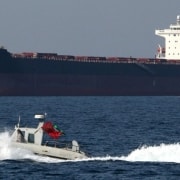
A commercial vessel was struck by an unidentified projectile while traveling through the Strait of Hormuz, according to the United Kingdom Maritime Trade Operations Centre. The incident, reported late Saturday, September 12, led to a fire aboard the vessel and prompted local authorities to assist with the evacuation of crew members. The event came as direct negotiations between the United States and Iran remained inactive, while Iranian and Gulf officials were preparing discussions in Oman on proposed shipping arrangements through the strategically important waterway.

The incident adds another consideration for global energy markets as commercial traffic through Hormuz remains substantially reduced. CNBC reported that Brent crude settled Friday at $104.61 per barrel and West Texas Intermediate at $100.05, after both benchmarks reached higher levels during the week. Saudi Arabia also temporarily closed its East-West crude pipeline as a precaution after drone attacks, affecting an important route used to bypass Hormuz. For mineral and royalty owners, these developments illustrate how geopolitics and transportation constraints can be important factors affecting oil prices and, consequently, revenue associated with oil and gas royalties.

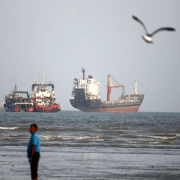
U.S. Central Command also said it had redirected 100 commercial vessels during the previous 60 days following the resumption of the U.S. naval blockade against Iran. With Hormuz serving as a major route for oil and other cargoes, shipping activity, regional security developments and diplomatic discussions remain closely watched by energy-market participants.

Source: CNBC

Read the full original article here

Ranger Land & Minerals curates weekly insights from across the oil and gas industry to keep our readers informed. To receive news like this directly in your inbox, join our free newsletter. If you’d like to learn more about mineral rights and oil royalty opportunities, contact us to speak with a representative.
DISCLAIMER: The summary above is based on information from third-party sources believed to be reliable, but its accuracy and completeness cannot be guaranteed. It is provided for general informational purposes only and does not constitute investment, financial, tax, legal, or other professional advice, nor a recommendation or solicitation to buy or sell any security, commodity, or investment product. Markets, regulations, and circumstances can change, and the information may not reflect the most current developments. You should conduct your own research and consult a qualified financial advisor, CPA, or other professional before making decisions based on this content. The publisher and its affiliates disclaim any liability for losses or damages arising from reliance on the information provided above.

U.S. forces carried out another series of strikes on September 1 against sites associated with Iran’s Islamic Revolutionary Guard Corps near the Strait of Hormuz. U.S. Central Command said the completed operation targeted air-defense and radar networks, maritime assets, mine-deployment capabilities and communications facilities following attempted attacks on commercial vessels and American personnel. President Donald Trump said the action also responded to Iranian efforts to place mines in the waterway and an earlier attack on a U.S. base. Iran subsequently reported launching missiles and drones toward American bases in the region, including a facility in Jordan.

The exchange returned market attention to shipping conditions through the Strait of Hormuz, where oil movements had recovered to approximately half of their prewar level during the preceding period of reduced military activity. West Texas Intermediate crude moved above $90 per barrel, while benchmark European natural-gas futures reached their highest level since January 2023. Bloomberg also reported that oil had gained more than 45% during 2026. Two supertankers attempting to leave the strait had been struck by projectiles one day earlier, although responsibility was not established. The developments illustrate how Hormuz shipping conditions and other factors affecting oil prices can influence energy costs, supply expectations and investor attention.

Source: Bloomberg
Read the full original article here

Ranger Land & Minerals curates weekly insights from across the oil and gas industry to keep our readers informed. To receive news like this directly in your inbox, join our free newsletter. If you’d like to learn more about mineral rights and oil royalty opportunities, contact us to speak with a representative.
DISCLAIMER: The summary above is based on information from third-party sources believed to be reliable, but its accuracy and completeness cannot be guaranteed. It is provided for general informational purposes only and does not constitute investment, financial, tax, legal, or other professional advice, nor a recommendation or solicitation to buy or sell any security, commodity, or investment product. Markets, regulations, and circumstances can change, and the information may not reflect the most current developments. You should conduct your own research and consult a qualified financial advisor, CPA, or other professional before making decisions based on this content. The publisher and its affiliates disclaim any liability for losses or damages arising from reliance on the information provided above.

Iran said negotiations with Oman over new shipping arrangements in the Strait of Hormuz were approaching completion, while emphasizing that an agreement with Oman would not automatically lead to a full reopening of the waterway. Tehran has linked broader access to several U.S. actions, including sanctions relief, the release of frozen Iranian assets, changes to maritime restrictions and compensation related to the conflict. Iranian proposals also call for a role in managing vessel entry through the strait.

The discussions remain important for global energy markets because the Strait of Hormuz normally carries about one-fifth of worldwide oil and gas shipments. Progress toward restoring more regular tanker traffic could therefore influence global supply availability, shipping costs and benchmark crude prices. For mineral and royalty owners, the situation is another example of how geopolitics and transportation routes can become important factors affecting oil prices.

Previous efforts to restore normal energy flows through Hormuz have shown that shipping activity may take time to return to established levels even after an agreement is announced. Tanker positioning, insurance coverage, refinery schedules and producer operations can all affect the pace of recovery, as outlined in Ranger’s earlier coverage of the Hormuz reopening and oil supply timeline. Investors and energy-market participants are continuing to watch the negotiations for their potential effect on crude supply and pricing.

Source: Bloomberg

Read the full original article here

Ranger Land & Minerals curates weekly insights from across the oil and gas industry to keep our readers informed. To receive news like this directly in your inbox, join our free newsletter. If you’d like to learn more about mineral rights and oil royalty opportunities, contact us to speak with a representative.
DISCLAIMER: The summary above is based on information from third-party sources believed to be reliable, but its accuracy and completeness cannot be guaranteed. It is provided for general informational purposes only and does not constitute investment, financial, tax, legal, or other professional advice, nor a recommendation or solicitation to buy or sell any security, commodity, or investment product. Markets, regulations, and circumstances can change, and the information may not reflect the most current developments. You should conduct your own research and consult a qualified financial advisor, CPA, or other professional before making decisions based on this content. The publisher and its affiliates disclaim any liability for losses or damages arising from reliance on the information provided above.

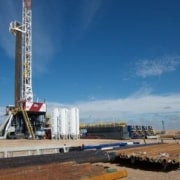
U.S. oil and gas drilling activity increased in the latest weekly report, according to OilPrice.com, citing Baker Hughes data released Friday. The total U.S. rig count rose to 573, which is 26 higher than the same period last year. Oil rigs increased by seven to 440, while gas rigs rose by three to 125. Miscellaneous rigs were unchanged at eight.

The report also noted that U.S. crude output averaged 13.819 million barrels per day for the week ending June 19, up slightly from 13.806 million barrels per day the prior week and 384,000 barrels per day above year-earlier levels. Completion activity was steady, with Primary Vision’s frac spread count unchanged at 192 crews. In key producing regions, the Permian Basin added two rigs to reach 258, while the Eagle Ford held at 44.

For readers tracking factors affecting oil prices and oil and gas royalties, the data offers a snapshot of U.S. supply activity as markets also watch shipping conditions around the Strait of Hormuz. OilPrice.com reported Brent at $71.90 per barrel and WTI at $69.43 during Friday trading.

Source: OilPrice.com
Read the full original article here

Ranger Land & Minerals curates weekly insights from across the oil and gas industry to keep our readers informed. To receive news like this directly in your inbox, join our free newsletter. If you’d like to learn more about mineral rights and oil royalty opportunities, contact us to speak with a representative.
DISCLAIMER: The summary above is based on information from third-party sources believed to be reliable, but its accuracy and completeness cannot be guaranteed. It is provided for general informational purposes only and does not constitute investment, financial, tax, legal, or other professional advice, nor a recommendation or solicitation to buy or sell any security, commodity, or investment product. Markets, regulations, and circumstances can change, and the information may not reflect the most current developments. You should conduct your own research and consult a qualified financial advisor, CPA, or other professional before making decisions based on this content. The publisher and its affiliates disclaim any liability for losses or damages arising from reliance on the information provided above.

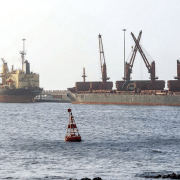
U.S. Treasury Secretary Scott Bessent said the administration is currently comfortable with some Iranian, Indian, and Chinese fuel shipments moving through the Strait of Hormuz, as more vessels begin passing through the key energy corridor. He said the flow of tankers appears to be improving without a formal naval escort system in place, and framed that movement as a way to help keep global energy markets supplied during the ongoing conflict involving Iran.

Bessent also said any additional U.S. response to higher oil prices would depend on how long the conflict continues, indicating that broader market measures would be shaped by the duration of the disruption. For mineral owners and energy-focused readers, the story highlights how geopolitical events around major export chokepoints can quickly influence commodity prices and, in turn, affect the broader environment in which oil and gas royalties are valued and discussed.

Source: CNBC
Read the full original article here
Ranger Land & Minerals curates weekly insights from across the oil and gas industry to keep our readers informed. To receive news like this directly in your inbox, join our free newsletter. If you’d like to learn more about mineral rights and oil royalty opportunities, contact us to speak with a representative.
DISCLAIMER: The summary above is based on information from third-party sources believed to be reliable, but its accuracy and completeness cannot be guaranteed. It is provided for general informational purposes only and does not constitute investment, financial, tax, legal, or other professional advice, nor a recommendation or solicitation to buy or sell any security, commodity, or investment product. Markets, regulations, and circumstances can change, and the information may not reflect the most current developments. You should conduct your own research and consult a qualified financial advisor, CPA, or other professional before making decisions based on this content. The publisher and its affiliates disclaim any liability for losses or damages arising from reliance on the information provided above.