Informational Guides & How-To Resources with specific types of property or business. Check our valuable guides on this page today at Ranger Land & Minerals.

How much oil does a typical well really produce, and why do some wells seem to gush while others barely trickle? Whether you are reading headlines about record production, reviewing a production report, or trying to understand a royalty statement, oil well production numbers can feel abstract and confusing at first.

This guide breaks oil well production down into plain language. You will learn how production is measured, what “average” daily output actually means, how wells typically decline over time, and how daily, annual, and lifetime production all fit together. Along the way, we will also explore where to find reliable data and how production trends can influence the value of oil and gas interests over the long term.

⚠️ IMPORTANT LEGAL DISCLAIMER:

The information provided on this page is for general informational purposes only and does not constitute legal, financial, or investment advice. Oil and gas laws, mineral rights regulations, and royalty structures vary significantly by state and jurisdiction. While we strive to provide accurate and up-to-date information, no guarantee is made to that effect, and laws may have changed since publication.

You should consult with a licensed attorney specializing in oil and gas law in your jurisdiction, a qualified financial advisor, or other appropriate professionals before making any decisions based on this material. Neither the author nor the publisher assumes any liability for actions taken in reliance upon the information contained herein.

Key Takeaways

  • Oil well production is commonly measured in barrels of oil per day (bbl/d), per month, per year, and as total cumulative output over the productive life of the well.
  • Most wells produce modest volumes, while a relatively small percentage of high-output wells account for a large share of total production in many regions.
  • Wells follow a decline curve: production is generally highest early in the well’s life and decreases over time as reservoir pressure and flow rates fall.
  • Understanding daily, annual, and lifetime production helps readers interpret production reports, news articles, and royalty statements with more confidence.
  • Public data from state regulators and national agencies can be used to compare an individual well’s performance with regional averages and trends.
  • Production trends are only one part of understanding value. Ownership type, royalty rate, costs, prices, and taxes all work together to determine potential income from a well.

If you are reviewing specific production data and want help understanding how those numbers relate to potential income or transactions involving oil and gas interests, you can contact Ranger Land & Minerals for a confidential, no-obligation conversation.

How Oil Well Production Is Measured

The first step in understanding oil well production is to clarify what the numbers actually represent. In most contexts, “production” refers to the volume of hydrocarbons that is brought to the surface and sold over a given period of time.

Several key units and terms appear frequently in production reports:

  • Barrel (bbl): A standard barrel of crude oil is equal to 42 U.S. gallons.
  • Barrels per day (bbl/d): The most common way to describe daily oil production for a well, field, or region.
  • Thousand cubic feet (MCF): A standard unit for measuring natural gas volumes. Reports may also show “MMCF” for million cubic feet.
  • Barrel of oil equivalent (BOE): A unit that converts natural gas volumes into an energy-equivalent amount of oil so that oil and gas can be combined into a single number. For example, a certain volume of gas may be expressed as “X BOE” based on its energy content.
  • Production rate: The amount of oil or gas produced during a given time interval, often expressed per day, month, or year.
  • Cumulative production: The total volume of hydrocarbons produced from a well over time, from the beginning of production until a specific date.

Oil companies and operators measure production at or near the well site using tanks, meters, and monitoring systems. These measurements are reported to state oil and gas regulators, royalty owners, and buyers. In many U.S. states, you can look up historical production by well name or identification number through online databases maintained by state agencies or commissions.

If you want to understand how production connects with ownership and income, it may be helpful to review broader guides on oil and gas royalties, mineral rights and mineral ownership, and selling mineral rights.

Daily Oil Well Production: What Happens in a Typical Day?

In the early days of oil exploration, dramatic stories of “gushers” delivering tens of thousands of barrels per day captured public imagination. While those historical cases are part of industry lore, they are not representative of modern, everyday well performance.

Today, wells fall along a wide spectrum of daily production rates. A few simple categories can make this easier to visualize:

High-Output Wells

Some newer horizontal wells in highly productive basins can start with very high initial production (often abbreviated “IP”) rates. In their first months, these wells may produce hundreds of barrels per day or more, especially if they are drilled in premium reservoir rock and completed using advanced multi-stage hydraulic fracturing.

These wells may dominate regional production statistics even though they represent a relatively small share of the total well count. Over time, however, even high-output wells experience decline as reservoir pressure falls and the most accessible hydrocarbons are produced.

Moderate-Output Wells

Many wells fall into a “moderate-output” middle range. This group includes a variety of vertical and horizontal wells that might produce anywhere from a few dozen to a few hundred barrels per day, particularly in the earlier years of their life cycle.

Moderate-output wells are important because they represent a large share of the wells that stay online for many years. Their daily rates may not make headlines, but their contribution to annual and lifetime production can still be substantial, especially where multiple wells are developed on the same lease or field.

Stripper and Marginal Wells

At the lower end of the spectrum are stripper wells, often called marginal wells. These are low-producing wells that typically deliver a small number of barrels per day. In many definitions used by industry groups and regulators, a stripper oil well is one that produces around 15 barrels of oil per day or less over a twelve-month period.

Individually, stripper wells do not produce much. Collectively, they can make up a large share of the total number of wells in mature fields. They can provide modest but ongoing production for many years, but they also raise important questions about economics, emissions, and eventual plugging and abandonment.

Average Daily Oil Well Production vs. the Distribution of Wells

When people ask, “How many barrels per day does the average oil well produce?” they are usually hoping for a single, simple number. In reality, any average hides a very uneven distribution.

In many regions, a relatively small number of high-output wells account for a large share of total production. At the same time, a very large number of wells produce only modest volumes each day. That means the “average” daily production figure may be higher than what most individual wells actually produce.

A simplified way to think about this distribution is:

  • Many wells produce less than about 15 BOE per day and are considered low-producing or marginal.
  • A significant number of wells fall between roughly 15 and 100 BOE per day.
  • A small top tier of wells produces more than 100 BOE per day and can account for a disproportionately large share of total output.

For analysts, regulators, and investors, it is often more useful to think in terms of ranges and distributions rather than one single “average well” that does not truly exist in the field. Understanding where a specific well falls in this distribution can provide helpful context when evaluating performance or reading production reports.

Annual Oil Well Production: Looking at the Bigger Picture

Daily snapshots are useful, but many people prefer to think in yearly terms—both for planning and for comparing wells to one another. Annual production is simply the sum of all monthly volumes over a twelve-month period.

Consider a simplified example of a hypothetical oil well:

  • In the first month, the well averages 400 barrels per day.
  • As the well declines during the first year, the average daily rate over that year falls to 250 barrels per day.

To estimate the annual volume at that average rate, you can multiply:

Annual production ≈ 250 barrels per day × 365 days = 91,250 barrels in year one.

In year two, the average daily rate may decline again, perhaps to 150 barrels per day, resulting in a lower annual total. Over time, each successive year tends to contribute less than the early years as decline continues.

At larger scales, such as a field or state, annual production figures are often expressed in millions or billions of barrels. Analysts may divide those totals by the number of producing wells to calculate a rough average per well, but this average will still be shaped by the same uneven distribution described earlier.

Lifetime Oil Well Production and Decline Curves

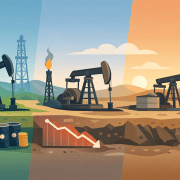
No oil well produces at the same rate forever. Instead, production typically follows a pattern known as a decline curve. Understanding decline curves is central to forecasting how much oil a well may ultimately produce over its economic life.

What Is a Decline Curve?

A decline curve is a graph showing how a well’s production rate changes over time. While the exact shape varies with reservoir and well design, many wells roughly follow this pattern:

  • Initial production (IP): Shortly after a well is completed and placed on line, production is usually at its highest. This early performance often draws the most attention.
  • Early decline: After the initial period, production begins to decline more quickly as reservoir pressure adjusts and the easiest-to-flow hydrocarbons are produced.
  • Late-life production: Over time, the decline rate often slows, and the well may produce modest volumes for many years at lower rates.

Engineers use mathematical decline curve models to estimate how quickly production will fall and how much cumulative volume the well may produce under different scenarios. These models, combined with price assumptions and cost estimates, help determine whether a well is likely to remain economic to operate over the long term.

Typical Lifetime Production

Because every reservoir and well design is unique, there is no single “correct” number for lifetime production. Some horizontal wells in prolific shale basins may produce hundreds of thousands of barrels over decades, while smaller or shallower wells may produce far less.

The concept of an economic limit is also important. A well may still contain oil in the reservoir even after it is shut in or plugged. Eventually, however, there comes a point where the revenue from selling the oil or gas can no longer justify the cost of operating and maintaining the well. At that point, the well’s economic life is over, even if a small amount of technically recoverable hydrocarbons remain.

Key Factors That Influence Oil Well Production

Several major factors combine to determine how much oil a well will produce each day, each year, and over its lifetime. Understanding these drivers can help you interpret why two wells in the same region might perform very differently.

1. Geology

The rock itself is fundamental. Reservoir characteristics such as porosity, permeability, thickness, and pressure all influence how easily fluids can flow toward the wellbore. Wells drilled into high-quality reservoir rock generally have higher initial and lifetime production potential than those drilled into poorer-quality rock.

2. Well Design and Completion

Engineering decisions also play a major role. Factors include:

  • The length of the horizontal section (in horizontal wells).
  • The number, spacing, and orientation of hydraulic fracturing stages.
  • Well spacing patterns across the field or unit.

As drilling and completion technology has advanced, operators have been able to produce more oil and gas from fewer wells, especially in tight formations like shale.

3. Operating Practices and Downtime

How a well is operated day-to-day also affects production. Preventive maintenance, timely repairs, and efficient flow management can help sustain production. Conversely, downtime due to equipment failures, infrastructure constraints, or scheduled maintenance reduces daily and annual output.

4. Commodity Prices and Economics

Oil and gas prices have an indirect but powerful influence on production. High prices may encourage operators to invest in workovers, enhanced recovery techniques, or additional wells on a property. When prices are low, operators may decide to defer drilling, reduce activity, or temporarily shut in marginal wells.

5. Regulatory and Environmental Factors

Regulations and environmental policies shape how wells are drilled, produced, and eventually abandoned. In some areas, low-producing or older wells may face stricter requirements related to emissions or plugging and abandonment. Discussions around marginal and orphaned wells have grown in recent years as regulators and communities seek to balance energy production with environmental stewardship.

Understanding Stripper and Marginal Wells

Stripper wells and marginal wells occupy a special place in the oil and gas landscape. These wells typically produce only a small volume of oil or gas each day—often around 15 barrels of oil equivalent per day or less.

Because their production rates are low, stripper and marginal wells can be sensitive to price changes and operating costs. A modest drop in prices or an increase in required maintenance can turn a barely economic well into one that is no longer viable. At the same time, these wells can be important in aggregate, especially in mature fields where large numbers of low-rate wells continue producing small but meaningful volumes.

From a policy and environmental standpoint, marginal wells also raise questions around emissions, monitoring, and eventual plugging. Discussions about orphaned wells—wells that no longer have a responsible operator—often focus on the long-term impact of aging, low-producing wells that have reached or passed their economic limit.

Where to Find Oil Well Production Data

If you are trying to understand production from a specific well or area, there are several common sources of data:

  • State oil and gas regulators: Many U.S. states maintain online databases where you can search for production histories by well name, operator, or identification number.
  • National agencies: National-level data and analyses are often available from agencies that track crude oil and natural gas production, reserves, and well counts.
  • Industry reports and research organizations: Trade publications and independent research groups regularly publish studies on well productivity, decline trends, and regional production patterns.
  • Private data providers: Commercial services compile and analyze well-level production data across multiple states and basins for professional users.

For readers who want to connect production numbers with financial outcomes, resources such as the guide on how much money you can make from an oil well can be helpful in thinking through different scenarios.

If you are working through dense production reports, well files, or royalty statements and find that the volume numbers do not clearly translate into dollars and cents, you can reach out to Ranger Land & Minerals through the contact page to discuss your situation with an experienced team.

Using Production Numbers to Understand Value

Production is a crucial part of any conversation about the value of oil and gas interests, but it is not the only piece of the puzzle. A well that produces a large volume of oil may or may not translate into strong income for a specific owner, depending on how that owner participates in the revenue stream.

At a high level, several elements work together:

  • Ownership type: Whether someone holds mineral rights, a non-operated royalty interest, an overriding royalty interest, or a working interest greatly influences risk and reward.
  • Royalty rate and lease terms: The royalty percentage specified in an oil and gas lease determines what share of production revenue is reserved for royalties. Lease language may also address post-production costs, marketing arrangements, and shut-in provisions.
  • Production profile: The shape of the decline curve—how quickly production falls from initial levels toward long-term rates—has a major impact on cumulative production and cash flow.
  • Prices, costs, and taxes: Commodity prices, operating expenses, and tax obligations (such as severance taxes and income taxes) all influence net income.

For people evaluating whether to hold or sell oil and gas interests, it is helpful to think in terms of both current production and potential future outcomes. Guides such as the overview on selling mineral rights and discussions about paid-up oil and gas leases can provide additional context on how production trends fit into broader ownership decisions.

Frequently Asked Questions About Oil Well Production

How many barrels of oil does a typical well produce per day?

There is no single daily production number that applies to every well. Some high-output wells in very productive basins can produce hundreds of barrels per day or more, particularly early in their life. Many other wells produce only a few dozen barrels per day, and marginal wells may produce less than about 15 barrels of oil equivalent per day.

What is considered a high-producing oil well?

A high-producing well is one that sits near the top of the production distribution in its region. In many modern shale plays, this may mean wells whose initial production is several hundred barrels per day or more, often combined with strong early-month production volumes.

How long does an oil well usually produce?

Many oil wells have an economic life measured in years or decades, not weeks or months. It is common for wells to continue producing at lower rates long after the early, high-output period has passed. Eventually, the well reaches a point where operating costs outweigh the value of the oil and gas being produced, and the well is shut in or plugged.

Why do oil wells decline over time?

Oil wells decline because the pressure that drives fluids toward the wellbore falls as production continues and because the most accessible hydrocarbons are often produced first. Over time, flow paths change, and fluid movement slows, resulting in lower production rates. Decline curves are the tools engineers use to describe and forecast this behavior.

What is a stripper or marginal well?

A stripper or marginal well is a low-producing oil or gas well that typically delivers only a small volume each day—often around 15 barrels of oil equivalent per day or less. These wells can remain economic for some operators under the right conditions but tend to be sensitive to price changes and maintenance costs.

Where can I learn more about how production relates to royalties?

To explore how production volumes interact with ownership, royalties, and potential income, it can be helpful to read focused guides on oil and gas royalties, mineral rights basics, and how much money an oil well may generate under different scenarios.

Next Steps

Oil well production is at the heart of the broader oil and gas industry. By understanding how production is measured, how daily rates evolve into annual and lifetime volumes, and how wells decline over time, you can read reports, news articles, and statements with greater clarity.

For general readers, these concepts provide useful context for following energy trends. For landowners, investors, and professionals, they offer a framework for evaluating wells, interpreting production reports, and thinking about long-term value.

If you are reviewing production data for a specific property, considering a transaction involving oil and gas interests, or simply want an experienced team to help you interpret what the numbers may mean over time, you can contact Ranger Land & Minerals today to request a confidential discussion.

Remember: This information is for educational purposes only. Consult qualified professionals for advice specific to your situation and jurisdiction. To learn more about our available opportunities, contact our team today.

⚠️ IMPORTANT LEGAL DISCLAIMER:

The information provided on this page is for general informational purposes only and does not constitute legal, financial, or investment advice. Oil and gas laws, mineral rights regulations, and royalty structures vary significantly by state and jurisdiction. While we strive to provide accurate and up-to-date information, no guarantee is made to that effect, and laws may have changed since publication.

You should consult with a licensed attorney specializing in oil and gas law in your jurisdiction, a qualified financial advisor, or other appropriate professionals before making any decisions based on this material. Neither the author nor the publisher assumes any liability for actions taken in reliance upon the information contained herein.

If you own mineral rights in the United States, you may be sitting on a potentially large stream of income. Thousands of property owners across the country have contacted oil companies and investors in order to drill and profit from the precious minerals in Earth. This is your guide on how to get oil companies to drill on your land too.

In general, this is accomplished one of two ways: by selling or leasing mineral rights. In this article, we are going to explore the pros and cons of selling or leasing your mineral rights as you seek to find an answer on how to get oil companies to drill on your land too.

Selling Your Mineral Rights

When you sell your mineral rights, an interested party becomes the owner of your property’s subsurface and has the right to explore it for valuable minerals. Aren’t you selling directly to the oil company? Then, the buyer likely has plans to start or continue a drilling operation.

Pros of Selling Your Mineral Rights

  • Mineral rights sales are generally settled with large lump sums of cash.
  • The sale of mineral rights is eligible for a 1031 exchange, which can be used to strategically acquire another property without the income tax.
  • You will no longer have to pay taxes on your mineral rights or oil royalties.

Cons of Selling Your Mineral Rights

  • Your mineral rights have the potential to become more valuable in the future.

Leasing Your Mineral Rights

Alternatively, if you do not want to give up your mineral rights entirely, you have the option to sign an oil and gas lease. In a mineral rights lease, you can sign a temporary agreement. This is to let an oil and gas company explore, procure, and sell minerals from your property.

Pros of Leasing Your Mineral Rights

  • You may receive an initial bonus, and signing payment.
  • If the production is successful, you will earn oil or gas royalties on the precious minerals produced.
  • You still maintain ownership of your mineral rights and have only agreed to the temporary exploration of the site.

Cons of Leasing Your Mineral Rights

  • Leases dependent on large oil production levels may not cash out as well as expected
  • Oil lease ownership can change hands without your involvement.

Contacting the Right People

Once you have decided whether a lease or sale is best for your mineral rights, then it becomes time to get into contact with the right people. There are many companies and individuals who are going to be interested in acquiring the right to drill on your land for oil or gas, so it is important to work with someone you can trust. Ranger Minerals is a Texas-based company with over 100 years of combined industry experience that can help with mineral rights transactions all across the country.

Remember: This information is for educational purposes only. Consult qualified professionals for advice specific to your situation and jurisdiction.
⚠️ IMPORTANT LEGAL DISCLAIMER:

The information provided on this page is for general informational purposes only and does not constitute legal, financial, or investment advice. Oil and gas laws, mineral rights regulations, and royalty structures vary significantly by state and jurisdiction. While we strive to provide accurate and up-to-date information, no guarantee is made to that effect, and laws may have changed since publication.

You should consult with a licensed attorney specializing in oil and gas law in your jurisdiction, a qualified financial advisor, or other appropriate professionals before making any decisions based on this material. Neither the author nor the publisher assumes any liability for actions taken in reliance upon the information contained herein.

Oil wells come in all shapes and sizes. All across the United States, there are oil wells being built, used, and torn down, and thanks to over 100 years of drilling history, the public now knows a lot about the ins and outs of a typical drilling operation. In this article, we are going to explore the average lifespan of an oil well (and gas well also).

The Average Lifespan of an Oil Well

In general, it is commonly accepted that an oil or gas well can expect to last between 20 and 40 years of significant production. With that said, new technologies are constantly being developed to make oil operations longer and more efficient. If a well is not being tapped at the maximum rate, it may last way longer than average. In fact, there is an active oil well in Pennsylvania that was first drilled over a century ago!

The Different Classifications of an Oil Well (or Gas Well)

When people ask, “How long does an oil well last?” they are typically referring to a well that is actively being drilled to extract and sell precious minerals. That is what the industry refers to as an “Active Well.” There are several other stages an oil or gas well may go through in its lifetime. They are as follows:

  • Inactive – A well that has ceased production for 1 year but is expected to produce again.
  • Suspended – A well that has been inactive for a long period of time, and requires special effort to reactivate, but is expected to produce in the future.
  • Abandoned – A permanently shutdown well in which all of the equipment has been safely removed.
  • Orphaned – Abandoned wells with no owner claiming the rights

What Happens When an Oil Well is Dry?

An oil well “dries up” when it has been drilled sufficiently enough so that it no longer produces a profitable amount of oil. When a company decides to end a drilling operation, the land is often sold to another owner. The extraction equipment is removed and the land is reclaimed or restored. In areas close to residential homes, significant landscaping is performed and evidence of an oil well is generally completely erased.

Remember: This information is for educational purposes only. Consult qualified professionals for advice specific to your situation and jurisdiction.
⚠️ IMPORTANT LEGAL DISCLAIMER:

The information provided on this page is for general informational purposes only and does not constitute legal, financial, or investment advice. Oil and gas laws, mineral rights regulations, and royalty structures vary significantly by state and jurisdiction. While we strive to provide accurate and up-to-date information, no guarantee is made to that effect, and laws may have changed since publication.

You should consult with a licensed attorney specializing in oil and gas law in your jurisdiction, a qualified financial advisor, or other appropriate professionals before making any decisions based on this material. Neither the author nor the publisher assumes any liability for actions taken in reliance upon the information contained herein.

If you own mineral rights, then you can potentially earn a large amount of money by finding the right oil royalty buyers. Frequently, those buyers may actually find you. We put together this article to help you along your journey to sell your oil royalties or mineral rights.

Individuals vs. Companies – Oil and Gas Royalty Buyers

There are thousands of individuals and companies that are actively looking to buy mineral rights and oil royalties. Although the best deal should always prevail, there are a few general trends when selling oil or gas royalties to oil royalty buyers.

Person to Person Oil Royalty Purchases

Although these transactions are more common as gifts or in a will, oil royalties and mineral rights often do change hands between individuals. Here, there is not going to be as many oil royalty buyers as a commercial transaction. You will want to make sure that the person buying your mineral rights is someone you can trust. As a bonus, person to person transactions generally have a better chance to include personalized clauses to best suit your needs.

Person to Company Oil Royalty Purchases

Most commonly, a landman representing a larger oil or gas company will have an interest in buying your mineral rights. Whereas negotiations like these typically fall under strict company guidelines, there is a chance that the added resources of a firm will result in a better overall deal on the seller’s end. Because every individual case is different, it is advisable to explore individual and corporate sales opportunities.

How to Value Your Oil Royalties for Sale

Because oil and gas royalty sales are not always made public, the only way to truly value your oil royalties is by collecting multiple offers. Investors will do their due diligence in order to find the best possible price for your oil royalties, while still making it a profitable venture for themselves. By analyzing local historic data, inspecting the property, and factoring in current market prices, your potential buyers will quickly make the value of your oil royalties apparent.

Speaking to An Expert

Before you sell your oil royalties, it is a good idea to speak to an expert, like Ranger Land & Minerals. No matter how inciting an offer may be, it is crucial to communicate with someone who knows the ins and outs of oil and gas royalty transactions in order to point out red flags and ensure the best possible deal is being made.

Remember: This information is for educational purposes only. Consult qualified professionals for advice specific to your situation and jurisdiction.
⚠️ IMPORTANT LEGAL DISCLAIMER:

The information provided on this page is for general informational purposes only and does not constitute legal, financial, or investment advice. Oil and gas laws, mineral rights regulations, and royalty structures vary significantly by state and jurisdiction. While we strive to provide accurate and up-to-date information, no guarantee is made to that effect, and laws may have changed since publication.

You should consult with a licensed attorney specializing in oil and gas law in your jurisdiction, a qualified financial advisor, or other appropriate professionals before making any decisions based on this material. Neither the author nor the publisher assumes any liability for actions taken in reliance upon the information contained herein.

Whenever you sign an oil and gas lease, you may be getting a signing bonus. As one of the most important parts of your negotiation, a one time upfront payment from the oil and gas company may be the quickest way to earn money with your mineral rights.

What happens when the company strikes oil? Then, you begin to receive oil and gas royalties for your percentage share of the minerals produced and sold. Although no two mineral leases are the same, in this article, we will cover some of the expected timelines for oil and gas royalty payments.

Oil Royalties after Signing a Mineral Lease

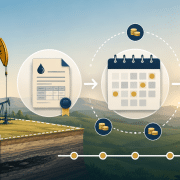
By law, oil and gas royalties payments are required due 120 days after the end of the month of the first sale of production from the well. So let’s say that you own mineral rights and sign a lease agreement in March. The oil company sources the financing, equipment, and labor and strikes its first barrel of oil in mid-April. The company sells 100 barrels in April. The company is then required to report its oil and gas royalties 120 days after April 30, approximately 4 months later in August.

Oil and Gas Royalty Payments Period

After the royalty is due, the oil and gas company has a certain window to pay the shareholder, as defined in the lease agreement. In general, most companies will pay oil royalties within 60 days of due payment and gas royalties within 90 days. This means that after signing a mineral rights lease, the latest you will receive your first royalty payment is about 180 days after the first productive month. Subsequently, later payments for oil production is paid 2 months in arrears, while gas production is generally paid 3 months in arrears.

Delayed Oil and Gas Royalties and Unproductive Leases

An important thing to understand is that sometimes, oil and gas royalty payments may never come. Although most oil and gas companies sign leases with the intention to explore and extract precious minerals, there are many factors that may prevent that from happening.

In addition to the loss of funding and delayed timelines, there is also a possibility that your land may not have any oil and gas at all. With that said, modern technology and over a century of exploration now allow for the oil and gas industry to make very educated decisions in exploring for underground resources.

Remember: This information is for educational purposes only. Consult qualified professionals for advice specific to your situation and jurisdiction.
⚠️ IMPORTANT LEGAL DISCLAIMER:

The information provided on this page is for general informational purposes only and does not constitute legal, financial, or investment advice. Oil and gas laws, mineral rights regulations, and royalty structures vary significantly by state and jurisdiction. While we strive to provide accurate and up-to-date information, no guarantee is made to that effect, and laws may have changed since publication.

You should consult with a licensed attorney specializing in oil and gas law in your jurisdiction, a qualified financial advisor, or other appropriate professionals before making any decisions based on this material. Neither the author nor the publisher assumes any liability for actions taken in reliance upon the information contained herein.

If you own an interest share in the mineral rights of oil production, then you are probably enjoying a steady stream of oil royalties in your portfolio. With high stakes values, a large number of players, and hundreds of pages of legal contracts, sometimes it can be difficult to fully understand your role in the process of oil production. In this article, we are going to outline how to identify the rights that you have, as an oil royalty owner.

Your Rights as Mineral Rights Owner – The Paperwork

Oil and gas agreements are not required to be made public, and the highly individualized nature of mineral rights agreements make it difficult to identify a “standard” handbook of mineral rights owners’ rights.

With this in mind, there are a few very critical pieces of paperwork that you should always have available. It is also advisable to seek expert advice in order to review the following documents.

A Copy of The Deed

The deed which defines your ownership rights of the property’s subsurface is crucial in defining your asset. If you own a fee simple estate, then your surface rights and mineral rights are usually defined in the same deed. If it is a split estate, then the mineral deed is no different than a surface rights deed, just separate. Mineral deeds are public records and can be obtained either online or with a local courthouse.

A Copy of the Lease

Once the lease is signed, it becomes the most important document in a mineral rights agreement. Here, the rights of the surface and mineral owners are clearly defined as they affect an oil company’s pursuit in exploring and extracting minerals. It is crucial to understand the time periods and compensation associated with an oil company’s permission to enter the property. Although oil and gas leases are not public records, a copy must be filed with the local courthouse and the records can be obtained at a later date.

A Division Order

Oftentimes, oil wells are divided between multiple mineral rights owners. This makes it a requirement for oil companies to send out a division order, or a division of interest, to lay out the percentage ownership and rights for each mineral owner. Division orders must be signed and returned to the oil company, but mineral rights owners should absolutely keep a copy for their records.

Any Communication with Oil Companies

Lastly, it is always a good idea to print or save any copies of communications with an oil company. As a mineral rights owner, you want to be up to date (and know the history of) all of the happenings of the operations in which you have a stake in. For the worst-case scenario, copies of all oil company communications can help in the court of law if you feel as if your rights have been violated as an oil royalty owner.

Remember: This information is for educational purposes only. Consult qualified professionals for advice specific to your situation and jurisdiction.
⚠️ IMPORTANT LEGAL DISCLAIMER:

The information provided on this page is for general informational purposes only and does not constitute legal, financial, or investment advice. Oil and gas laws, mineral rights regulations, and royalty structures vary significantly by state and jurisdiction. While we strive to provide accurate and up-to-date information, no guarantee is made to that effect, and laws may have changed since publication.

You should consult with a licensed attorney specializing in oil and gas law in your jurisdiction, a qualified financial advisor, or other appropriate professionals before making any decisions based on this material. Neither the author nor the publisher assumes any liability for actions taken in reliance upon the information contained herein.

Mineral rights leases with oil and gas companies can be a highly profitable venture for earning oil and gas royalties. Unfortunately, the high stakes industry has a lot of players, some of which do not like to play by the rules.
If you feel as if a company has violated your oil and gas lease agreement, you may be entitled to compensation in the court of law. In this article, we are going to cover some of the most common oil and gas lease violations and what to do if you find yourself in an agreement that has not been upheld.

Improper Royalty Calculations

One of the most common disputes between oil companies and mineral rights owners are over incorrect royalty payments. Cases like this are vigorously defended in court and are only awarded to lessors who can provide sufficient evidence that their royalty payments were miscalculated. In order to prove this, mineral rights owners should have copies of their lease and the company’s division of interest in order to outline their fair share of royalty sales.

Failure to Reasonably Develop the Land

In most oil and gas agreements, there are “implied covenants” such as a lessee’s requirement to reasonably develop the land for mineral extraction. For example, let’s say a mineral rights owner agrees to have an oil and gas company explore and extract oil on 400 acres of land. The lessee then drills one well that drains 50 acres of land and ceases production for the next 5 years.

In this case, the oil company has failed to reasonably attempt to develop all of the predetermined land in the agreement. As the mineral rights owners, this allows you to claim the oil and gas company acted unreasonably, which may lead to compensation if taken to trial.

Missing or Wrongly Assigned Royalties

Whereas most mineral rights owners work well with oil and gas company agreements, what happens when the lessor passes away? Some of the most common disputes in mineral rights leases actually come from supposed heirs of oil royalties.

If you have inherited or have been gifted active mineral rights, then you may need to get in contact with the lessee to confirm you are receiving the appropriate mineral royalties. Failure for an oil company to correctly reassign royalty shares can result in a lawsuit, if it is outlined in the lease agreement.

Remember: This information is for educational purposes only. Consult qualified professionals for advice specific to your situation and jurisdiction.
⚠️ IMPORTANT LEGAL DISCLAIMER:

The information provided on this page is for general informational purposes only and does not constitute legal, financial, or investment advice. Oil and gas laws, mineral rights regulations, and royalty structures vary significantly by state and jurisdiction. While we strive to provide accurate and up-to-date information, no guarantee is made to that effect, and laws may have changed since publication.

You should consult with a licensed attorney specializing in oil and gas law in your jurisdiction, a qualified financial advisor, or other appropriate professionals before making any decisions based on this material. Neither the author nor the publisher assumes any liability for actions taken in reliance upon the information contained herein.

In the United States, there are hundreds of thousands of mineral rights owners. Of course, some individuals may be more actively aware of their mineral rights if their property is earning them monthly oil and gas royalties. If you own mineral rights or are looking to purchase mineral rights in the future, then there are plenty of resources available on how to find mineral rights owners and get into contact with them in order to learn, converse, and exchange information.
In this article, we will outline a few great resources. Resources on how to find mineral rights owners and connect with them both online and locally.

Online Mineral Rights Forums

Most notably, the popular Mineral Rights Forum (www.mineralrightsforum.com) is a great online conversation space for mineral rights owners in the United States. The website was formed in 2009 and is an amazing resource to ask specific questions about your individual situation. You can also browse through the hundreds of questions already answered over the past decade. The forum is free of solicitation, so users can find information without anything in return.

Minearlrightsforum.com is probably the largest and most credible source for digital answers. However, there is also more information scattered around the web. Websites like reddit.com, Quora, and Yahoo Answers. They all have large backlogs of helpful information on how to find mineral rights owners across the country.

Reaching Out to Speak with Mineral Rights Owners Directly

Are you struggling to find the answers you need? Would you simply prefer to have a conversation with a real person? Then online mineral rights forums may not be the best course of action. There is no requirement for mineral rights transactions to be public. With that, it may still be possible for you to find mineral rights owners in your area. Starting having conversations with them.

How to Find Who Owns Mineral Rights

Websites such as Mineral Holders (https://www.mineralholders.com/) take readily available information and store it into their online database. Although the information is not complete for the whole country, the website has probably the most comprehensive list of mineral rights owners in Texas. Website visitors can break down mineral ownership by county and can also search for specific individuals or companies that may own shares.

Remember: This information is for educational purposes only. Consult qualified professionals for advice specific to your situation and jurisdiction.
⚠️ IMPORTANT LEGAL DISCLAIMER:

The information provided on this page is for general informational purposes only and does not constitute legal, financial, or investment advice. Oil and gas laws, mineral rights regulations, and royalty structures vary significantly by state and jurisdiction. While we strive to provide accurate and up-to-date information, no guarantee is made to that effect, and laws may have changed since publication.

You should consult with a licensed attorney specializing in oil and gas law in your jurisdiction, a qualified financial advisor, or other appropriate professionals before making any decisions based on this material. Neither the author nor the publisher assumes any liability for actions taken in reliance upon the information contained herein.

Oil and gas ownership has one of the most interesting legal histories in the United States. The United States is one of the only countries that allows for private ownership of minerals found on the earth. Within the state, the laws surrounding mineral rights and oil and gas laws vary greatly between each state. In this article, we are going to outline the essential oil and gas laws to be aware of in the United States.

Who can own oil and gas in the United States?

The term when rights to own oil and gas below the surface of a property is “mineral rights.” In the United States, mineral rights is claimable by private individuals. Moreover by corporations, Indian tribes, or by local, state, or federal governments. The ownership and transfer of oil and gas rights are mainly operated under regional statutes and common law. These both fall beneath constitutional and federal law as well.

Oil and Gas Rights as Property

Over the past 150 years, oil and gas ownership in the United States has diverged into a huge portfolio. For private oil and gas rights today, the mineral rights of a piece of land can be sold, bought, or leased. It is as if they are any other piece of property. Mineral rights or “subsurface rights” is purchasable, sellable, or leasable independently. Moreover together with a property’s surface rights.

Finding Oil and Gas on Public (Federal or State) Property

The General Mining Law in the United States allows individuals and companies to “locate” mining claims on public lands. At the federal level, there is BLM (Bureau of Land Management) land. This is where individuals can explore the area for potentially valuable minerals. An individual does not become the subsurface rights owner of public land. With approval by the federal government, the individual can have access to develop and extract the minerals.

The same system is in place for state-owned land. The specific oil and gas laws surrounding ownership and transfer vary from state to state. For a full list of Mineral Rights Laws by state, see this index page from MineralWeb.

Remember: This information is for educational purposes only. Consult qualified professionals for advice specific to your situation and jurisdiction.
⚠️ IMPORTANT LEGAL DISCLAIMER:

The information provided on this page is for general informational purposes only and does not constitute legal, financial, or investment advice. Oil and gas laws, mineral rights regulations, and royalty structures vary significantly by state and jurisdiction. While we strive to provide accurate and up-to-date information, no guarantee is made to that effect, and laws may have changed since publication.

You should consult with a licensed attorney specializing in oil and gas law in your jurisdiction, a qualified financial advisor, or other appropriate professionals before making any decisions based on this material. Neither the author nor the publisher assumes any liability for actions taken in reliance upon the information contained herein.

There are many situations in which someone may ask, “How long do mineral rights validity last?”. Sometimes, an individual may inherit mineral rights from someone deceased, only to be left with unexpected taxes and a whole lot of questions.

In other cases, abandoned residential and commercial plots can be orphaned, leaving former owners to wonder if they are entitled to the property. In this article, we will explain how long mineral rights last and what that means for future owners.

Mineral Rights Last as Long as You Do

If you own mineral rights, they are yours. You own them until the day you die, that is unless you give them to someone else. There are three ways mineral rights are transferred: as a sale, as a gift, or in a will in the event of a death. Mineral rights are just like any other piece of property. As the rightful owner, you have the right to it so long as they are yours.

Does a person or a business were to own mineral rights and then fail to pass them to another party? then the property is considered abandoned. This is going to happen if a person dies or simply forgets they own the property or if a business were to cease operation but fails to sell its land.

Abandoned or Unclaimed Mineral Rights

In America, mineral rights laws vary from state to state. For the vast majority of states, however, abandoned or unclaimed mineral rights are going to eventually default to the current surface rights owner. This can take over 10 years, although is only usually a handful, depending on your location.

Conclusion

In conclusion, it is always important to do and keep your paperwork in order. If you own mineral rights, you own them until they are transferred from you in business or in death. Do you intend to bequeath your mineral rights to an heir? Then, it is important to make sure that everything is in order.

If you have further questions about mineral rights validity, feel free reach out to us here.

Remember: This information is for educational purposes only. Consult qualified professionals for advice specific to your situation and jurisdiction.