Tag Archive for: energymarkets

U.S. natural gas production and consumption are projected to reach new highs in both 2026 and 2027, according to the U.S. Energy Information Administration’s September Short-Term Energy Outlook. The agency expects dry gas production to increase from 107.6 billion cubic feet per day (Bcf/d) in 2025 to 111.7 Bcf/d in 2026 and 115.9 Bcf/d in 2027. Domestic consumption is forecast to rise from 91.9 Bcf/d in 2025 to 92.2 Bcf/d this year and 94.3 Bcf/d next year.

The latest outlook also raised the EIA’s 2026 estimates compared with its August forecast. Meanwhile, U.S. liquefied natural gas exports are expected to increase from 15.1 Bcf/d in 2025 to 17.4 Bcf/d in 2026 and 18.6 Bcf/d in 2027. Growing output from regions including the Permian Basin and Haynesville is expected to support supply, while inventories could enter the winter season about 5% above the five-year average.

For energy markets, the projections point to continued expansion in both domestic demand and export activity alongside rising supply. The outlook also provides useful context for mineral and royalty owners following broader natural gas production trends, particularly as U.S. LNG exports and major producing regions continue to grow.

Source: BOE Report
Read the full original article here
Ranger Land & Minerals curates weekly insights from across the oil and gas industry to keep our readers informed. To receive news like this directly in your inbox, join our free newsletter. If you’d like to learn more about mineral rights and oil royalty opportunities, contact us to speak with a representative.
DISCLAIMER: The summary above is based on information from third-party sources believed to be reliable, but its accuracy and completeness cannot be guaranteed. It is provided for general informational purposes only and does not constitute investment, financial, tax, legal, or other professional advice, nor a recommendation or solicitation to buy or sell any security, commodity, or investment product. Markets, regulations, and circumstances can change, and the information may not reflect the most current developments. You should conduct your own research and consult a qualified financial advisor, CPA, or other professional before making decisions based on this content. The publisher and its affiliates disclaim any liability for losses or damages arising from reliance on the information provided above.

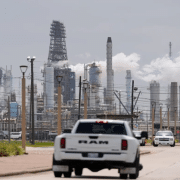
Exxon Mobil and Chevron reported substantial increases in second-quarter 2026 earnings as higher crude oil and refined-product prices supported their upstream and refining operations. Exxon Mobil earned $14.53 billion, an increase of 105% from the same quarter a year earlier, while revenue rose 42% to $116.02 billion. Chevron reported $12.07 billion in profit, up 385%, with quarterly revenue increasing 56% to $70.06 billion.

Energy prices moved higher as petroleum shipments through the Strait of Hormuz were sharply reduced during the U.S.-Iran conflict. Brent crude advanced from approximately $70 per barrel to more than $100 for much of the spring, briefly reaching $126. The average U.S. price for regular gasoline also reached $4.10 per gallon, about $1 higher than a year earlier. U.S. refineries with dependable crude supplies benefited from wider margins, with estimated late-July returns reaching $50 to $60 per barrel compared with a more typical range of $20 to $25.

The results demonstrate how geopolitics, supply availability and refining capacity can influence energy markets and company performance. For mineral and royalty owners, understanding the factors affecting oil prices and their relationship to oil and gas royalties can provide useful context when evaluating revenue and broader market conditions.

Source: Houston Public Media
Read the full original article here

Ranger Land & Minerals curates weekly insights from across the oil and gas industry to keep our readers informed. To receive news like this directly in your inbox, join our free newsletter. If you’d like to learn more about mineral rights and oil royalty opportunities, contact us to speak with a representative.
DISCLAIMER: The summary above is based on information from third-party sources believed to be reliable, but its accuracy and completeness cannot be guaranteed. It is provided for general informational purposes only and does not constitute investment, financial, tax, legal, or other professional advice, nor a recommendation or solicitation to buy or sell any security, commodity, or investment product. Markets, regulations, and circumstances can change, and the information may not reflect the most current developments. You should conduct your own research and consult a qualified financial advisor, CPA, or other professional before making decisions based on this content. The publisher and its affiliates disclaim any liability for losses or damages arising from reliance on the information provided above.

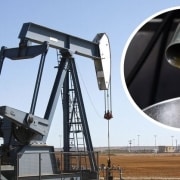
Interesting Engineering reports that researchers at the National Energy Technology Laboratory are studying ways to recover more oil and natural gas from shale and other tight formations after primary hydraulic fracturing operations. According to the article, these reservoirs can still hold significant hydrocarbons after initial production, making improved recovery methods important for domestic energy output and long-term oil well production planning.

The research uses nuclear magnetic resonance technology to examine rock cores and measure factors such as pore structure, porosity, permeability, fluid saturation, and wetting behavior. NETL’s work includes testing how injected fluids such as natural gas, water, surfactants, or carbon dioxide move through oil-saturated rock under subsurface pressure and temperature conditions.

For energy markets and mineral owners, the work is notable because higher recovery from existing formations could help operators improve production efficiency without relying only on new acreage. Better recovery techniques may also support more informed decisions around development, reserves, and oil and gas royalties tied to producing assets.

Source: Interesting Engineering

Read the full original article here

Ranger Land & Minerals curates weekly insights from across the oil and gas industry to keep our readers informed. To receive news like this directly in your inbox, join our free newsletter. If you’d like to learn more about mineral rights and oil royalty opportunities, contact us to speak with a representative.
DISCLAIMER: The summary above is based on information from third-party sources believed to be reliable, but its accuracy and completeness cannot be guaranteed. It is provided for general informational purposes only and does not constitute investment, financial, tax, legal, or other professional advice, nor a recommendation or solicitation to buy or sell any security, commodity, or investment product. Markets, regulations, and circumstances can change, and the information may not reflect the most current developments. You should conduct your own research and consult a qualified financial advisor, CPA, or other professional before making decisions based on this content. The publisher and its affiliates disclaim any liability for losses or damages arising from reliance on the information provided above.