Tag Archive for: crude

Oil prices moved higher in early trading as markets tracked escalating tensions between the United States and Venezuela and what that could mean for near-term crude supply flows. Brent crude rose about 1% to around $60.89 a barrel, while U.S. West Texas Intermediate gained roughly 1.15% to about $57.39 a barrel.

The latest uptick comes as Washington has stepped up pressure on Venezuelan oil shipments, a dynamic that traders have been watching for potential effects on exports. Recent U.S. actions aimed at sanctioned Venezuelan tankers have raised the possibility of disrupted cargo movements, with roughly 590,000 barrels a day of exports viewed as exposed in a tighter enforcement scenario. For investors, these developments add a geopolitical variable to pricing alongside broader market fundamentals, and can influence the revenue outlook tied to benchmarks that feed into oil and gas royalties over time.

Source: The Wall Street Journal
Read the full original article here

Ranger Land & Minerals curates weekly insights from across the oil and gas industry to keep our readers informed. To receive news like this directly in your inbox, join our free newsletter. If you’d like to learn more about mineral rights and oil royalty opportunities, contact us to speak with a representative.
DISCLAIMER: The summary above is based on information from third-party sources believed to be reliable, but its accuracy and completeness cannot be guaranteed. It is provided for general informational purposes only and does not constitute investment, financial, tax, legal, or other professional advice, nor a recommendation or solicitation to buy or sell any security, commodity, or investment product. Markets, regulations, and circumstances can change, and the information may not reflect the most current developments. You should conduct your own research and consult a qualified financial advisor, CPA, or other professional before making decisions based on this content. The publisher and its affiliates disclaim any liability for losses or damages arising from reliance on the information provided above.

Targa Resources Corp. has agreed to acquire Stakeholder Midstream LLC in a $1.25 billion all-cash transaction that deepens its presence in the Permian Basin. Stakeholder’s system includes about 480 miles of natural gas pipelines, roughly 180 MMcf/d of cryogenic processing and sour gas treating capacity, carbon capture activities that qualify for 45Q tax credits, and a small crude oil gathering network. The assets are backed by long-term, fee-based contracts across approximately 170,000 dedicated acres with low-decline production, providing Targa with a durable volume and cash flow profile.

The company expects the acquired system to generate about $200 million in annual unlevered adjusted free cash flow, with limited ongoing capital needs and modest integration costs. Targa plans to fund the purchase with existing cash and its $3.5 billion revolving credit facility, with closing targeted for early 2026 subject to customary regulatory approvals. For market participants, the deal underscores continued consolidation in midstream infrastructure and highlights the strategic value of sour gas treating, carbon capture, and fee-based contracts in a growing Permian Basin, where rising natural gas demand from LNG exports and power generation supports long-term throughput.

Source: Seeking Alpha
Read the full original article here

Ranger Land & Minerals curates weekly insights from across the oil and gas industry to keep our readers informed. To receive news like this directly in your inbox, join our free newsletter. If you’d like to learn more about mineral rights and oil royalty opportunities, contact us to speak with a representative.
Disclaimer: The summary above is based on information from third-party sources believed to be reliable, but its accuracy and completeness cannot be guaranteed. It is provided for general informational purposes only and does not constitute investment, financial, tax, legal, or other professional advice, nor a recommendation or solicitation to buy or sell any security, commodity, or investment product. Markets, regulations, and circumstances can change, and the information may not reflect the most current developments. You should conduct your own research and consult a qualified financial advisor, CPA, or other professional before making decisions based on this content. The publisher and its affiliates disclaim any liability for losses or damages arising from reliance on the information provided above.

OPEC+, the cartel of oil producers, agreed over the weekend to crank up production. Instead of falling, Brent oil prices rise about 3% to start the week, at a shade under $65 a barrel.

Prices in the global energy markets are experiencing an upward surge, a trend that analysts attribute to a combination of factors, notably Ukraine’s recent drone strikes targeting military airports within Russian territory. These strategic attacks have heightened tensions and introduced a sense of unpredictability into the market, leading to concerns about the stability of Russian oil production and supply chains. Additionally, there is a concerted effort among U.S. lawmakers to further isolate Russia economically by implementing stricter measures aimed at cutting Russian oil from global markets. This push reflects a broader strategy to weaken Russia’s financial position in the ongoing conflict while simultaneously seeking to ensure that other nations align with the sanctions regime.

The Parallel Development as Oil prices rise up

In a parallel development, Russian and Ukrainian officials are scheduled to engage in talks in Istanbul today, a meeting that could potentially pave the way for diplomatic progress. However, the backdrop of escalating military actions, particularly the drone strikes, creates an atmosphere of mistrust that may undermine the prospects for a breakthrough in negotiations. The prospect of peace in Ukraine remains a complex and contentious issue, as any resolution could theoretically lead to a relaxation of the stringent Western sanctions currently imposed on Russian energy exports. Such a shift could have significant implications not only for the dynamics of the conflict but also for the global energy landscape, affecting prices and supply chains across various markets. As the situation evolves, stakeholders are closely monitoring developments, aware that the interplay between military actions and diplomatic efforts will ultimately shape the trajectory of both the conflict and the global economy.

Click here to read the full article
Source: The Wall Street Journal

If you have any questions or thoughts about the topic, what happens when oil prices rise? Feel free to contact us here or leave a comment below.

On Thursday, oil prices broadly stable amid ongoing uncertainties related to conflicts in the Middle East and reports indicating that North Korean troops may be poised to assist Russia in Ukraine, keeping traders cautious as the U.S. presidential election approaches.

By 1318 GMT, Brent crude futures had increased by 46 cents, or 0.6%, reaching $75.42 per barrel, while U.S. West Texas Intermediate crude futures rose by 39 cents, also a 0.6% gain, to settle at $71.16.

This week, oil prices have risen approximately 3% following a decline of over 7% the previous week, attributed to a perceived de-escalation of tensions in the Middle East, alongside concerns regarding oversupply and sluggish demand.

Tamas Varga, an analyst at oil brokerage PVM, noted, “The interplay of economic uncertainty, a loose oil supply landscape, and potential disruptions related to conflict will likely prevent a definitive trend in oil prices in the near term, with medium-term risks leaning towards a downward trajectory.”

On Wednesday, the U.S. government reported evidence suggesting that North Korea has dispatched 3,000 troops to Russia, potentially for deployment in Ukraine, a development that could significantly intensify Russia’s conflict with Ukraine.

Intensifying Hostilities

In the Middle East, intensified hostilities between Israel and Hezbollah raised concerns regarding supply disruptions, while airstrikes carried out by Israel reportedly targeted the Syrian capital, Damascus, early Thursday.

Simultaneously, Washington is actively advocating for a resolution between Israel and Iranian-backed factions, including Hezbollah and Hamas, ahead of the U.S. presidential election on November 5, an event that could influence American foreign policy in the region as well as oil market dynamics.

Kelvin Wong, a senior market analyst at OANDA, observed, “Current betting market data indicates that Trump is leading over Kamala Harris, with Trump suggesting the U.S. could become a significant oil supplier. Such a policy shift could exert downward pressure on prices.” While betting markets favor Trump, alternative polling indicates that the election results remain highly competitive and uncertain.

Click here to read the full article
Source: Oil & Gas 360

If you have any questions or thoughts about the topic Oil prices broadly stable, feel free to contact us here or leave a comment below.

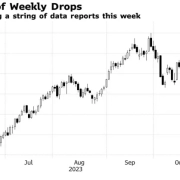
Oil rose 1.4% after three weeks of declines setting the oil stages relief rally.

Oil prices experienced a notable recovery, surging by 1.4%, following a string of three consecutive weeks of declines. This upward movement in prices has sparked a sense of relief among market participants who have been closely monitoring the volatility in the oil market. The recent decline in oil prices had raised concerns and uncertainties about the future direction of the market, making this relief rally a welcomed development.

The three-week decline in oil prices was primarily driven by a combination of factors, including concerns over global economic growth, the ongoing trade tensions between major economies, and fears of a potential oversupply in the market. These factors had created a bearish sentiment, leading to a downward pressure on oil prices. However, the recent rally suggests that market sentiment is shifting, as investors are hopeful that the worst of the decline may be behind us.

The Positive sentiment in global equity markets

It is worth noting that the relief rally in oil prices is also supported by broader market dynamics. The positive sentiment in global equity markets, driven by a series of positive economic data and central bank stimulus measures, has contributed to the rebound in oil prices. Additionally, recent geopolitical developments, such as the easing of tensions in certain key regions, have also played a role in boosting investor confidence in the oil market.

Looking ahead, market participants will closely monitor key factors that could impact the future trajectory of oil prices. The ongoing trade negotiations between the United States and China, as well as developments in major oil-producing nations like Saudi Arabia and Russia, will be closely watched for any potential impact on oil supply and demand dynamics. Furthermore, any shifts in global economic growth expectations could also have a significant influence on oil prices.

Following three weeks of declines has provided a sense of relief for market participants. The rally supports positive sentiment in global equity markets, and geopolitical developments. There are hopes of a resolution to key trade tensions. However, the future direction of oil prices remains uncertain. This is as investors continue to monitor various factors that could influence market dynamics.

Weakening Demand Outlook

West Texas Intermediate settled above $78 a barrel Monday, snapping a rout that saw oil plummet more than 13%. A weakening demand outlook and rising US supplies continue to weigh on the market. With that, technical signals suggest the recent sell-off was overdone. Moreover, OPEC on Monday reiterated its view that global supply balances are tight and consumption healthy. As a result, this will be supporting prices alongside a weaker dollar.

“The futures market appears oversold,” RBC Capital Markets analysts including Michael Tran wrote in a note. Yet he cautioned that this rally may be short-lived. This is with investors persistently on edge about demand given stubbornly high US interest rates.

Click here to read the full article
Source: Bloomberg

Do you have any questions or thoughts about the topic of oil stages relief? Feel free to contact us here or leave a comment below.

World Bank Oil Price

World Bank warns oil price could soar to a record high of more than $150 a barrel if the war between Israel and Hamas leads to a repeat of the full-scale conflict in the Middle East witnessed 50 years ago, the World Bank has warned.

In the first major assessment of the economic risks of an escalation of the war beyond Gaza’s borders, the World Bank said there was a risk of the cost of crude entering “uncharted waters”.

A “large disruption” scenario comparable with the Arab oil boycott of the west in 1973 would create supply shortages that would lead to the price of a barrel of oil increasing from about $90 to between $140 and 157. The previous record – unadjusted for inflation – was $147 a barrel in 2008.

World Bank Oil Price

Click here to read the full article
Source: The Guardian

If you have any questions or thoughts about the topic, feel free to contact us here or leave a comment below.